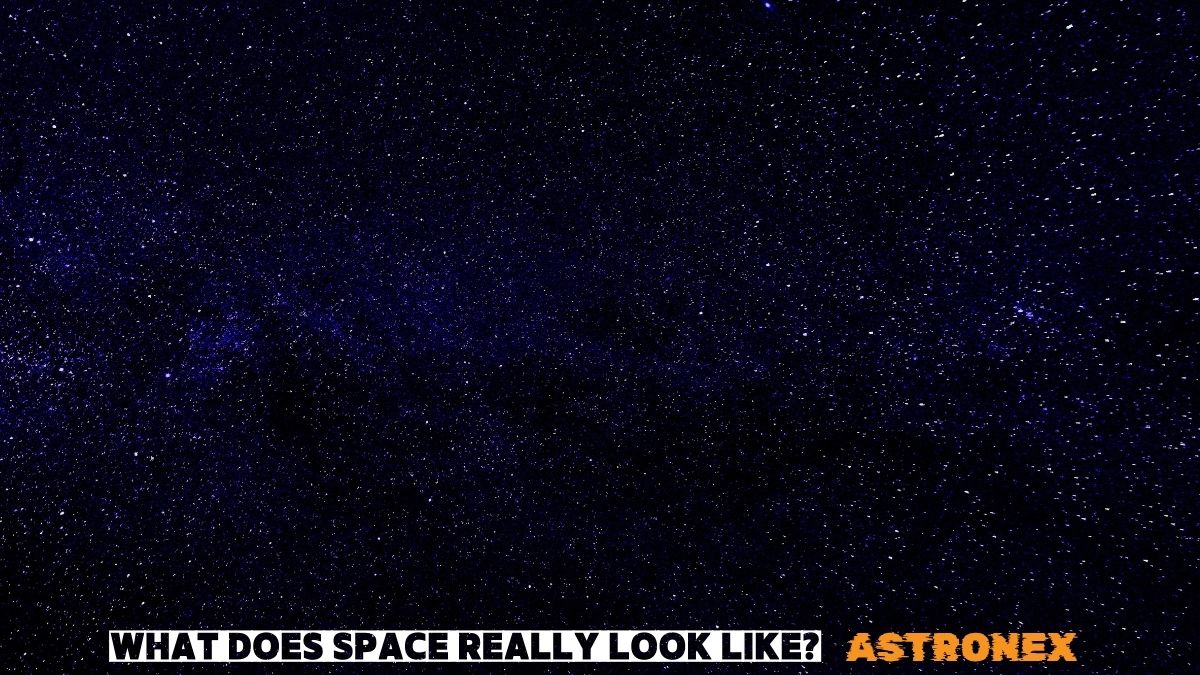
Recent missions have transformed our understanding of the cosmos, revealing intricate details invisible to the naked eye. In December 2025, NASA’s SPHEREx observatory released its first all-sky infrared map, captured in 102 different wavelengths, showing hot hydrogen gas in blue, cosmic dust in red, and hundreds of millions of galaxies across the sky. This map highlights frozen compounds like water ice, carbon dioxide ice, and carbon monoxide ice, key ingredients for life, in molecular clouds. Similarly, ESA’s Euclid mission, with its first images from 2023, provided sharp views of distant structures like the Perseus galaxy cluster and the Horsehead Nebula, helping map dark matter’s influence on cosmic evolution.
From the International Space Station, orbiting at about 400 km altitude, space appears as a deep black void with sharp, untwinkling stars and the glowing blue limb of Earth’s atmosphere. Astronauts describe intense darkness away from Earth’s sunlit side, with faint airglow near the horizon and brilliant auroras in greens and reds from excited oxygen and nitrogen at 100-400 km heights. These views show space filled with dynamic light against profound darkness.
What hidden details might future observations add to our view of the cosmos?
Why Does Space Look Black?
Space appears black primarily because it is a near-vacuum with extremely low matter density, averaging about 1 atom per cubic centimeter in interstellar regions (far lower than Earth’s 10^19 molecules per cm³ at sea level). This sparsity means little scattering of light, unlike Earth’s atmosphere which diffuses sunlight to create a blue sky. NASA’s Hubble Ultra Deep Field images show that even apparently empty patches contain about 10,000 faint galaxies when exposed long enough, but to human eyes in visible wavelengths (400-700 nm), distant sources remain pinpoint against darkness.
Astronauts on the ISS report nearly pitch-black conditions away from Earth’s sunlit limb, with faint airglow adding subtle glows near the horizon. For comparison, imagine a vast dark hall with distant spotlights; the space between seems utterly black.
Fun fact: The cosmic microwave background fills space with radiation at 2.7 Kelvin, but in invisible microwaves.
- Low density prevents light scattering.
- Vast distances dim stars to points.
- Dust absorbs visible light in some lanes.
- Eyes miss infrared/ultraviolet emissions.
To visualize density variations, refer to interstellar medium diagrams showing ranges from 0.1 to 10^6 atoms/cm³ in clouds.

What Do Stars Look Like from Space?
From space, stars appear as steady, sharp points of light without twinkling from atmospheric turbulence. Their true colors show: hot stars blue-white at over 10,000 Kelvin, cooler ones orange-red at 3,000 Kelvin. ISS astronauts report seeing thousands more stars than from ground due to no light pollution or air distortion, with dark-adapted eyes revealing many faint ones.
The Milky Way forms a brilliant, resolved band. Comparisons: Like pins on black velvet, colors reveal temperatures directly.
Fun fact: Planets like Venus reach magnitude -4.6 (extremely bright).
- No twinkling from steady viewing.
- Colors indicate temperatures accurately.
- Thousands visible to dark-adapted eyes.
- Cosmic rays cause occasional eye flashes.
Suggest Hertzsprung-Russell diagrams for star classifications.
How Does the Milky Way Look from Space?
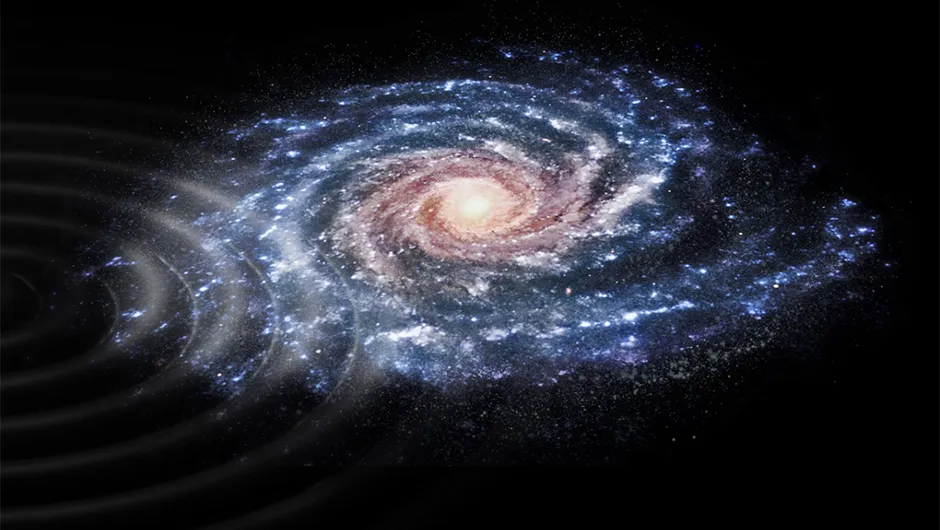
The Milky Way appears as a dense, glowing band of stars with dark dust lanes and brighter core from space. ESA’s Gaia mission, with Data Release 3 in June 2022 and Focused Product Release in October 2023, mapped billions of stars in 3D, confirming a barred spiral structure about 100,000 light-years across.
From ISS, it’s sharper and more detailed than ground views. Like a river of light with patchy shadows.
Fun fact: Central bulge holds older stars, arms younger ones.
- Barred spiral with major arms.
- Dust obscures visible but infrared penetrates.
- Rotation visible over time.
- Billions of stars resolved.
What Colors Appear in Space Images?
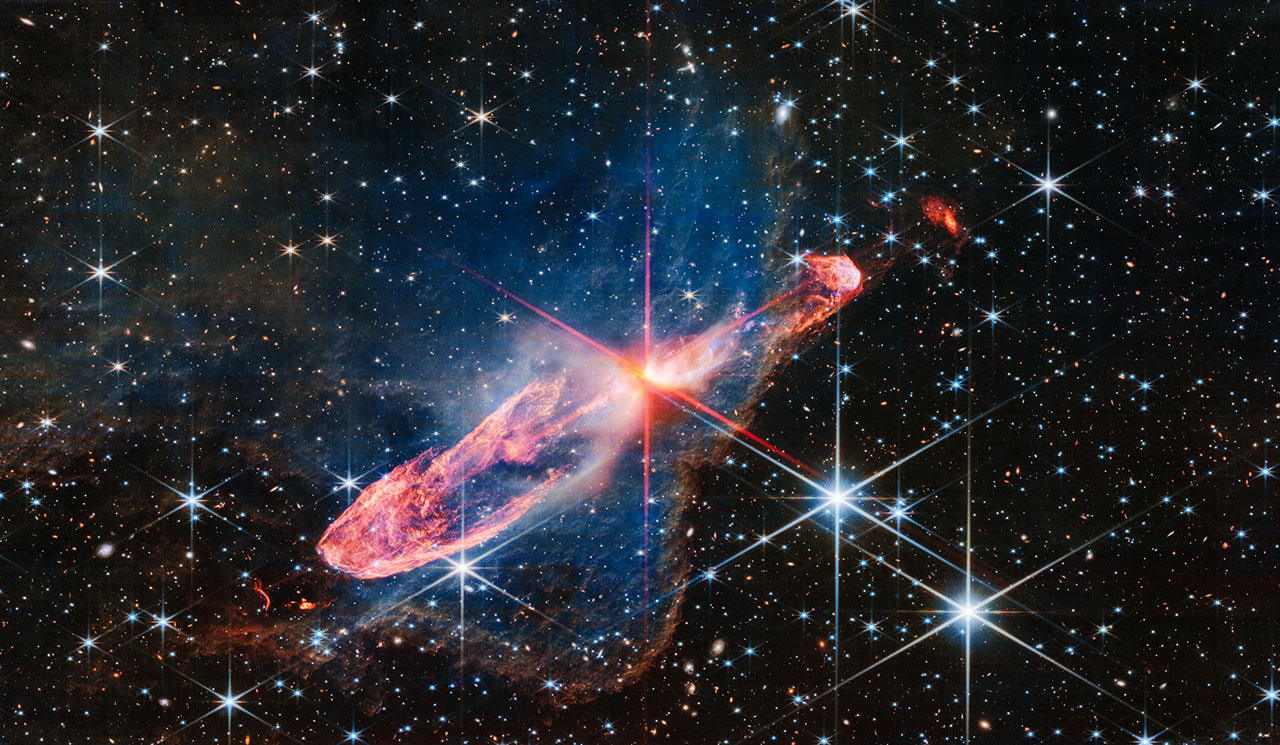
Space telescope images display vibrant colors by mapping invisible wavelengths to visible ones, called false-color imaging. NASA’s SPHEREx 2025 map uses 102 infrared bands to show hot gas in blue, dust in red, revealing hidden features.
True eye colors are subtler: mostly white stars, faint nebulae glows. Examples: Auroras true green/red.
Fun fact: Infrared shows cool dust at 20-100 Kelvin.
- False colors represent data.
- Hydrogen alpha red dominant.
- Hot stars blue, cool red.
- Multi-wavelength composites.
What Do Nebulae Look Like?
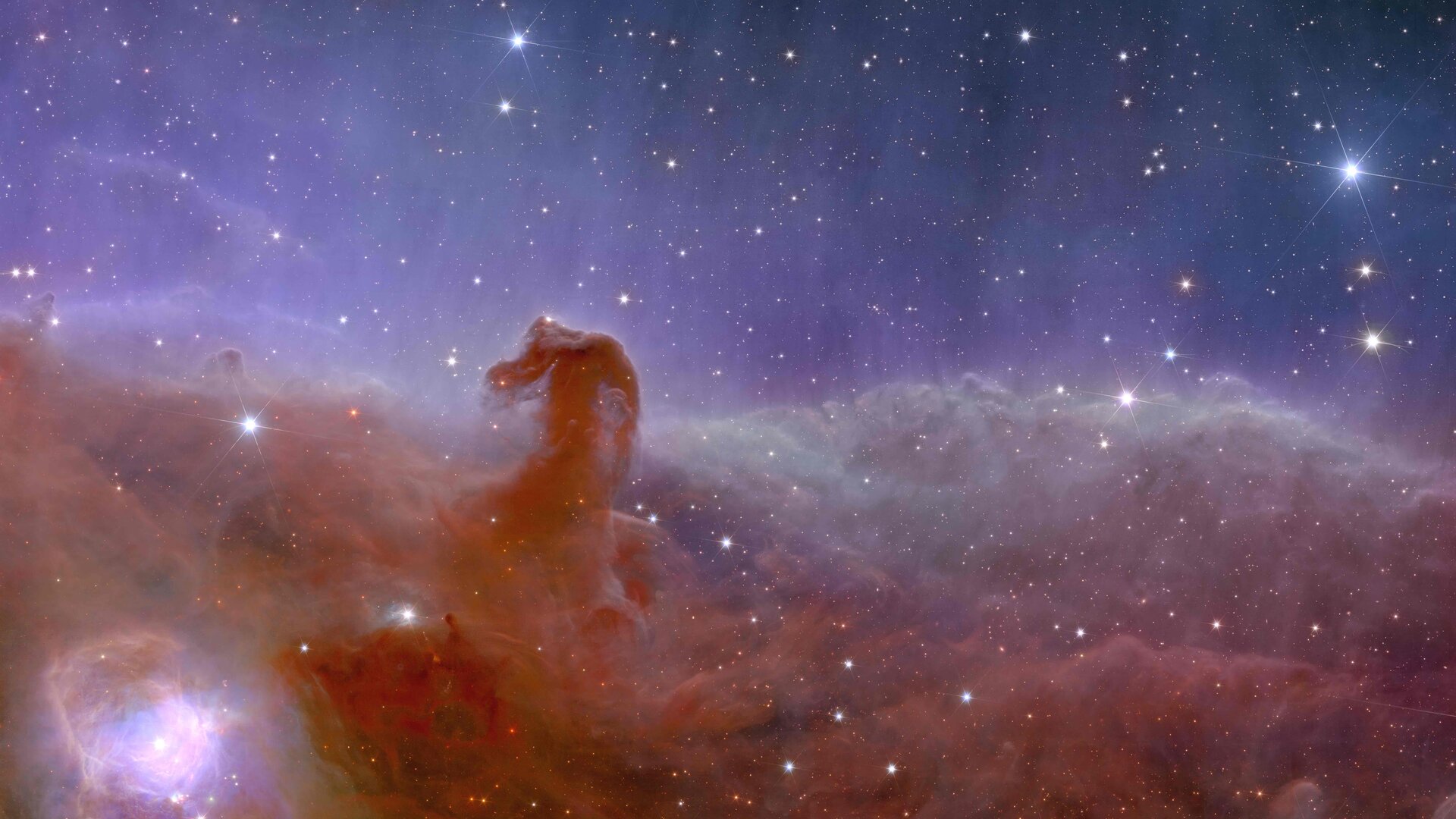
Nebulae are clouds of gas and dust appearing faint to eyes but spectacular in telescopes. ESA’s Euclid 2023 images captured the Horsehead Nebula in sharp detail, a dark pillar against glowing background.
Densities range 100-1,000 particles/cm³ in brighter regions. Types: Emission glow from ionization, reflection scatter light, dark absorb.
Like cosmic sculptures, sizes light-years.
Fun fact: Orion Nebula spans 24 light-years.
- Emission: Ionized hydrogen red.
- Reflection: Blue from scattering.
- Dark: Silhouettes against stars.
- Sizes 0.1 to hundreds light-years.
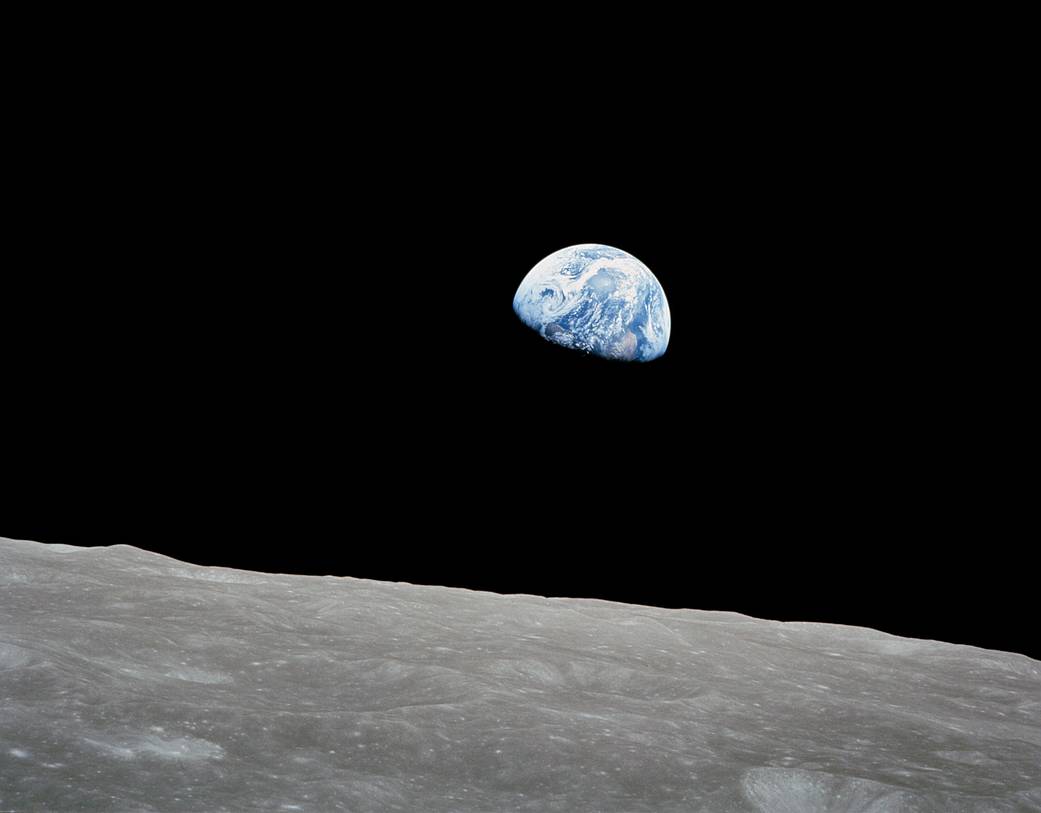
How Does Earth Look from Space?
Earth from space is a brilliant blue sphere with white clouds, green-brown lands, and thin atmospheric glow. NASA’s imagery shows oceans covering 71%, city lights at night forming networks. Diameter 12,742 km; the thin blue limb from scattering extends higher, though most mass concentrates lower.
Like fragile jewel in void.
Fun fact: Sunrises every 90 minutes.
- Blue from ocean reflection.
- Thin blue limb from scattering.
- Night lights visible.
- Auroras polar glows.
What Does Deep Space Look Like?
Deep space teems with galaxies, as Hubble Ultra Deep Field reveals nearly 10,000 in tiny patches, dating back billions years. Webb and Euclid extend this in infrared, showing early structures.
Like endless sea of island universes.
Fun fact: Observable universe 93 billion light-years across.
- Galaxies in clusters/filaments.
- Voids between.
- Redshifts show expansion.
- Background uniform large-scale.
In summary, space is a deep black vacuum dotted with sharp stars, glowing nebulae, and distant galaxies, enriched by multi-wavelength views from missions like SPHEREx and Euclid.
How might advancing technology further refine our perception of space’s vast appearance?
Sources
European Space Agency. (2023, November 7). Euclid’s first images: the dazzling edge of darkness. ESA Science & Exploration. https://www.esa.int/Science_Exploration/Space_Science/Euclid/Euclid_s_first_images_the_dazzling_edge_of_darkness
NASA Jet Propulsion Laboratory. (2025, December 18). NASA’s SPHEREx Observatory Completes First Cosmic Map Like No Other. JPL News. https://www.jpl.nasa.gov/news/nasas-spherex-observatory-completes-first-cosmic-map-like-no-other
NASA. (2024). Hubble Ultra Deep Field. NASA Science. https://science.nasa.gov/mission/hubble/science/universe-uncovered/hubble-deep-fields/
European Space Agency. (2023, October 10). Gaia Focused Product Release. ESA Science & Exploration. https://www.esa.int/Science_Exploration/Space_Science/Gaia/New_Gaia_release_reveals_rare_lenses_cluster_cores_and_unforeseen_science