
The observable universe contains an overwhelming abundance of matter over antimatter, with no significant reservoirs of primordial antimatter detected anywhere in the cosmic structure. This asymmetry contradicts the expectation from the Standard Model of particle physics, which predicts that the Big Bang should have produced matter and antimatter in exactly equal quantities. The explanation for this observed matter dominance requires physics beyond the Standard Model and involves symmetry-breaking mechanisms that violate a fundamental conservation principle known as baryon number conservation. The leading theoretical framework for understanding this asymmetry was established by Andrei Sakharov in 1967, who identified 3 necessary conditions that must be satisfied for a matter-antimatter asymmetry to develop from initially symmetric conditions.
The fundamental problem begins with the recognition that every particle physics process we can observe in laboratories today produces matter and antimatter in exactly equal amounts. When high-energy photons interact to create particle-antiparticle pairs, or when particles decay through known Standard Model interactions, the conservation of baryon number and lepton number ensures symmetric production. Baryon number is a quantum number assigned to quarks and their composite particles (baryons), with quarks carrying baryon number +1/3 and antiquarks carrying -1/3. Ordinary matter, composed of protons and neutrons, has positive baryon number, while antimatter has negative baryon number. If the universe began with zero net baryon number, and all subsequent processes conserved baryon number, the present universe should contain equal amounts of matter and antimatter, which is manifestly inconsistent with observations.
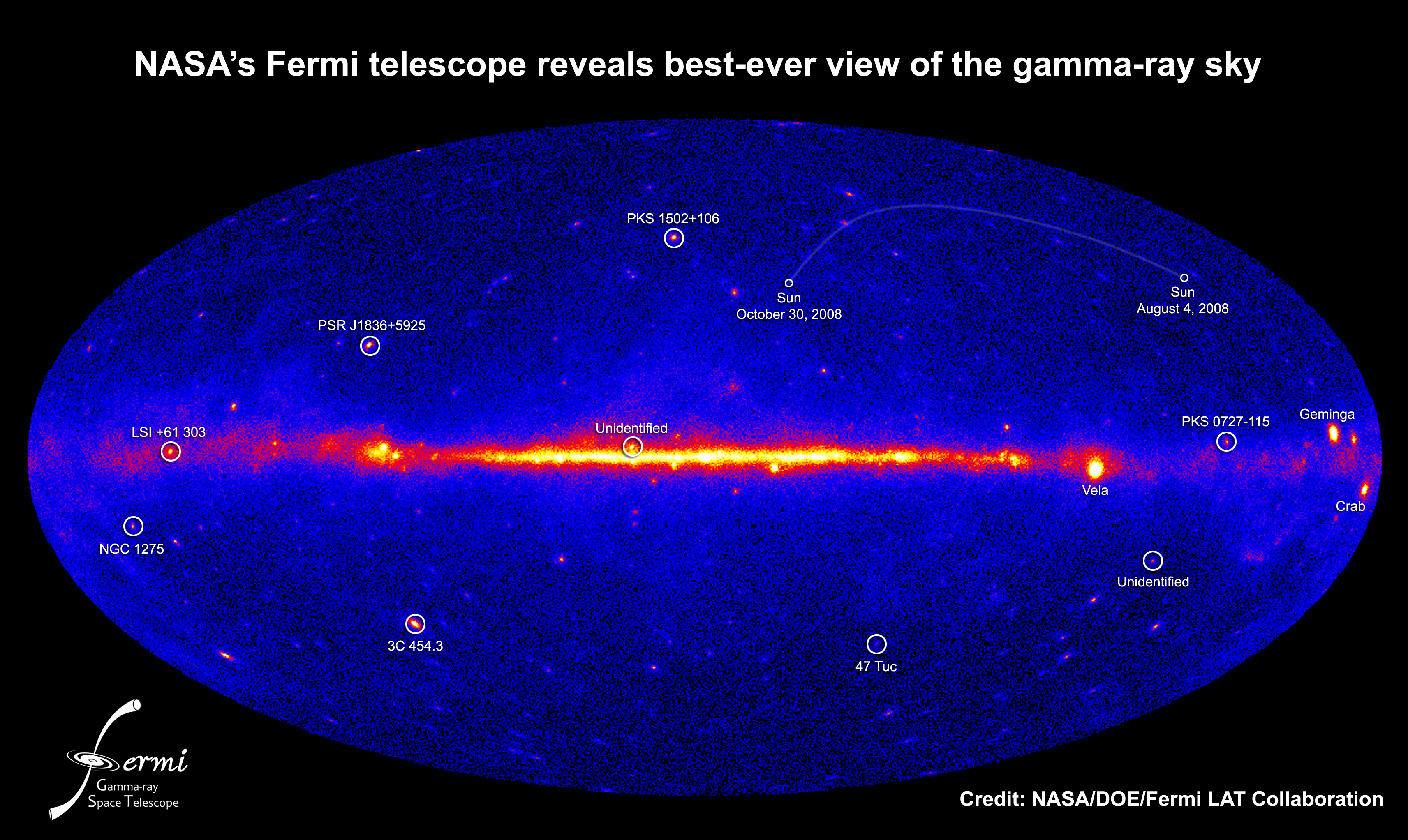
The observational evidence for matter dominance is compelling and multi-faceted. Astronomical observations reveal no significant matter-antimatter annihilation signatures that would be expected at the boundaries between hypothetical separated domains of matter and antimatter. When matter and antimatter come into contact, they annihilate and produce characteristic gamma-ray photons with energies of 511 keV from electron-positron annihilation, or higher energy gamma rays and pions from proton-antiproton annihilation. Sensitive gamma-ray observations by instruments such as the Compton Gamma Ray Observatory and the Fermi Gamma-ray Space Telescope have searched for these annihilation signatures and found no evidence of large-scale matter-antimatter boundaries anywhere in the observable universe. Additionally, cosmic ray detectors have measured the flux of antimatter particles arriving at Earth, finding only trace amounts of antiprotons and positrons that can be explained as secondary products of high-energy cosmic ray collisions with interstellar gas, rather than primordial antimatter from distinct antimatter regions.
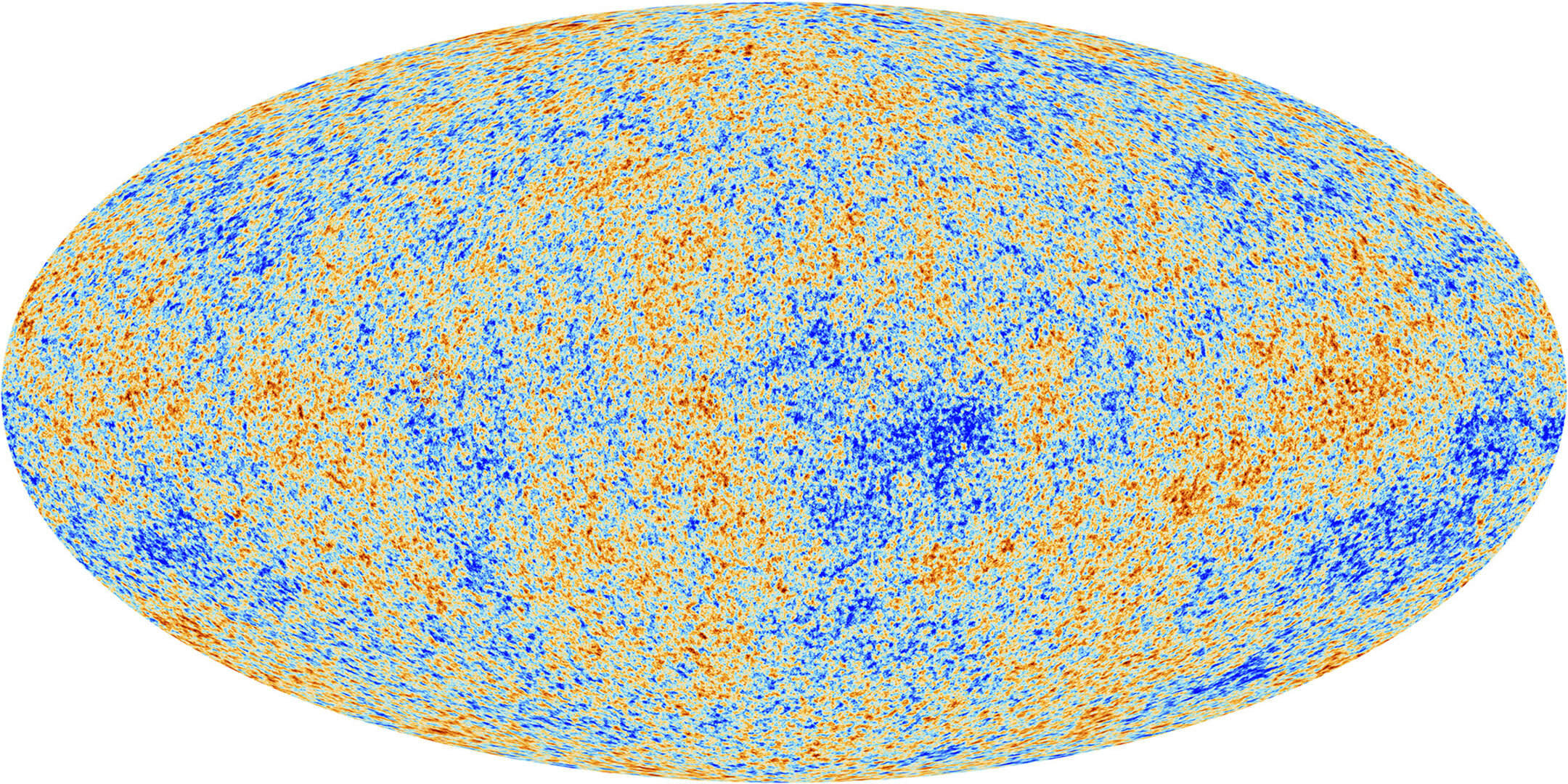
Quantitative measurements of the matter-antimatter asymmetry come from observations of the cosmic microwave background radiation and from Big Bang nucleosynthesis calculations. The asymmetry is characterized by the baryon-to-photon ratio, denoted η, which represents the number of baryons (protons and neutrons) relative to the number of photons in the universe. Precision measurements from the Planck satellite mission determined this ratio to be η = (6.09 ± 0.06) × 10-10. This seemingly tiny number has profound implications: it means that for every 1010 antimatter particles created in the early universe, there were 1010 + 1 matter particles. After all the matter and antimatter annihilated, only this 1 excess matter particle per 1010 remained to form everything we observe today, including all galaxies, stars, planets, and living organisms. The photons produced by the matter-antimatter annihilation now constitute the cosmic microwave background radiation, which contains about 1010 photons for every surviving baryon.
Andrei Sakharov identified 3 conditions that must be simultaneously satisfied for baryon asymmetry to develop from initially symmetric conditions. These conditions, known as the Sakharov conditions, are: (1) baryon number violation, (2) charge conjugation and charge-parity (C and CP) symmetry violation, and (3) departure from thermal equilibrium. Each condition is physically necessary, and the absence of any one condition would prevent the generation of a net baryon asymmetry even if the other conditions were satisfied.
The first Sakharov condition requires that baryon number must be violated by some physical process. As explained earlier, if baryon number were absolutely conserved in all interactions, then the zero net baryon number at the beginning of the universe would remain zero forever, regardless of what processes occurred. Baryon number violation allows processes that change the total number of baryons relative to antibaryons, enabling a non-zero net baryon number to emerge. In the Standard Model of particle physics, baryon number conservation is an accidental symmetry that appears to hold at the level of perturbative interactions, but quantum field theory allows baryon number to be violated through non-perturbative processes. Specifically, the Standard Model contains electroweak interactions involving configurations of gauge fields called sphalerons, which can violate both baryon number and lepton number while preserving the combination B – L (baryon number minus lepton number). These sphaleron processes are extremely suppressed at low temperatures but become significant at temperatures above approximately 1012 K, which were achieved in the early universe during the electroweak epoch around 10-11 seconds after the Big Bang.
The second Sakharov condition requires violation of C and CP symmetry. Charge conjugation (C) is the operation that transforms particles into their antiparticles, while parity (P) reverses spatial coordinates. CP symmetry would mean that the laws of physics treat matter and antimatter identically when spatial coordinates are also reversed. If CP symmetry were exact, then any process that produces an excess of matter over antimatter would have a corresponding CP-conjugate process producing an equal excess of antimatter over matter, resulting in no net asymmetry. CP violation allows certain processes involving matter to occur at different rates than the corresponding processes involving antimatter, which is essential for generating a baryon asymmetry. CP violation was first discovered experimentally in 1964 in the decay of neutral kaons by James Cronin and Val Fitch, for which they received the Nobel Prize in Physics in 1980. Subsequently, CP violation has been observed in the decays of B mesons and D mesons, and is incorporated into the Standard Model through the complex phase in the Cabibbo-Kobayashi-Maskawa (CKM) quark mixing matrix. However, the amount of CP violation predicted by the CKM mechanism in the Standard Model is far too small to account for the observed baryon asymmetry, typically falling short by many orders of magnitude. This insufficiency constitutes one of the strongest indications that physics beyond the Standard Model must exist.
The third Sakharov condition requires departure from thermal equilibrium. This condition is more subtle but equally essential. If all processes occur in perfect thermal equilibrium, then the principle of detailed balance requires that every process and its inverse process occur at exactly equal rates. Even if baryon-number-violating and CP-violating processes exist, in thermal equilibrium the forward process creating a baryon excess would be exactly balanced by the reverse process removing that excess, resulting in zero net baryon asymmetry. Departure from thermal equilibrium breaks this detailed balance, allowing the forward and reverse processes to occur at different rates and enabling a net asymmetry to accumulate. In the expanding early universe, departure from thermal equilibrium can occur when the expansion rate becomes comparable to or faster than the interaction rate of certain processes, causing those processes to “freeze out” before equilibrium is restored. Alternatively, a first-order phase transition can provide a dramatic departure from thermal equilibrium at the interface between different phases.
Several theoretical mechanisms have been proposed to satisfy all 3 Sakharov conditions and generate the observed baryon asymmetry. These mechanisms operate at different energy scales and involve different extensions of the Standard Model. The major classes of baryogenesis mechanisms include Grand Unified Theory (GUT) baryogenesis, electroweak baryogenesis, and leptogenesis.
GUT baryogenesis proposes that the baryon asymmetry was generated at extremely high temperatures around 1028 K, corresponding to energy scales near 1016 GeV, shortly after the inflationary epoch at approximately 10-36 seconds after the Big Bang. Grand Unified Theories attempt to unify the strong, weak, and electromagnetic forces into a single unified interaction at high energies. These theories predict the existence of extremely massive gauge bosons, typically denoted X and Y bosons, with masses near the GUT scale of 1016 GeV. These bosons couple to both quarks and leptons and can mediate baryon-number-violating processes. In GUT baryogenesis, the heavy X and Y bosons are produced thermally in the hot early universe, and subsequently decay through CP-violating interactions into final states with different baryon numbers. The key mechanism is that the decay rate of X bosons into quarks differs slightly from the decay rate of anti-X bosons into antiquarks due to CP violation, resulting in a net excess of quarks over antiquarks. The departure from thermal equilibrium occurs because the decay rate of the superheavy bosons becomes smaller than the expansion rate of the universe as it cools, causing the bosons to decay out of equilibrium. While GUT baryogenesis provides an elegant framework consistent with all 3 Sakharov conditions, it faces significant challenges. The GUT scale is far beyond the reach of any conceivable particle accelerator, making direct experimental verification impossible. Furthermore, many GUT models predict proton decay with lifetimes that should have been observable by existing experiments, yet no proton decay has been detected, with current experimental limits requiring proton lifetimes exceeding 1034 years.
Electroweak baryogenesis proposes that the asymmetry was generated at the electroweak phase transition, which occurred when the universe cooled to temperatures around 1015 K at approximately 10-11 seconds after the Big Bang. At this epoch, the Higgs field underwent a phase transition from a symmetric phase (where electroweak symmetry is unbroken and particles are massless) to a broken symmetry phase (where the Higgs field acquires a vacuum expectation value and particles obtain masses through the Higgs mechanism). If this phase transition is first-order rather than a smooth crossover, it proceeds through the nucleation and expansion of bubbles of the broken-symmetry phase within the surrounding symmetric phase. The bubble walls provide the departure from thermal equilibrium required by the third Sakharov condition. CP-violating interactions with the Higgs field can cause different reflection and transmission probabilities for particles and antiparticles encountering the bubble wall. Combined with baryon-number-violating sphaleron processes, which are suppressed inside the bubbles (broken phase) but active outside the bubbles (symmetric phase), these effects can generate a net baryon asymmetry that becomes trapped inside the expanding bubbles. Electroweak baryogenesis has the attractive feature of operating at energy scales potentially accessible to particle physics experiments, and it is directly connected to the observed Higgs boson discovered at the Large Hadron Collider in 2012. However, electroweak baryogenesis in the minimal Standard Model fails for 2 critical reasons. First, the amount of CP violation in the CKM matrix is insufficient by several orders of magnitude. Second, the observed Higgs boson mass of 125 GeV implies that the electroweak phase transition is a smooth crossover rather than a first-order transition, eliminating the necessary departure from thermal equilibrium. These failures can be resolved in extensions of the Standard Model that include additional sources of CP violation and additional scalar fields that can modify the nature of the phase transition. Many such models exist, including supersymmetric extensions and models with extended Higgs sectors, but none has yet been experimentally confirmed.

Leptogenesis provides an alternative mechanism that has become increasingly favored in recent years. This mechanism generates a lepton asymmetry rather than directly producing a baryon asymmetry, but the lepton asymmetry is subsequently converted into a baryon asymmetry through sphaleron processes. Leptogenesis requires the existence of very heavy right-handed neutrinos, sometimes called sterile neutrinos, which do not participate in Standard Model weak interactions. The existence of such particles is independently motivated by the observed phenomenon of neutrino oscillations, which requires neutrinos to have small but non-zero masses. The most attractive explanation for neutrino masses is the seesaw mechanism, in which the tiny masses of the known (left-handed) neutrinos arise from their coupling to superheavy right-handed neutrinos with masses typically in the range 109 to 1015 GeV. In the leptogenesis scenario, these heavy right-handed neutrinos are produced thermally in the early universe at temperatures comparable to their masses. They subsequently decay through CP-violating processes into leptons and Higgs bosons, with the decay rates to leptons differing slightly from the decay rates to antileptons. This creates a net lepton asymmetry. The heavy neutrinos decay out of thermal equilibrium when the expansion rate of the universe exceeds their interaction rate, satisfying the third Sakharov condition. The generated lepton asymmetry then gets partially converted into a baryon asymmetry by sphaleron processes, which violate both baryon number B and lepton number L while conserving B – L. Remarkably, detailed calculations show that leptogenesis can naturally produce a baryon asymmetry of the observed magnitude η ≈ 6 × 10⁻¹⁰ for reasonable choices of the heavy neutrino masses and CP-violating phases. Leptogenesis is particularly attractive because it connects the baryon asymmetry problem to the observed phenomenon of neutrino masses, providing a unified explanation for 2 of the major mysteries in particle physics. However, like GUT baryogenesis, the energy scales involved are far beyond experimental reach, making direct verification extremely challenging.
The mathematical framework underlying baryogenesis can be illustrated with the Boltzmann equations that describe the evolution of particle number densities in the expanding universe. For a heavy particle species X (which could represent GUT bosons, heavy neutrinos, or other beyond-Standard-Model particles) that can decay and produce a baryon or lepton asymmetry, the evolution of the number density nX of X particles and the baryon number density nB are governed by coupled differential equations:
where H is the Hubble expansion rate, ΓX is the decay rate of the X particles, nXeq is the equilibrium number density of X particles, and ε is the CP-violating asymmetry parameter that characterizes the difference between the baryon number produced in X decays versus anti-X decays. The first term -3Hn in each equation represents the dilution of number densities due to the expansion of the universe (the number density decreases as the volume increases with the scale factor cubed). The remaining terms describe the production and decay of particles and the generation of asymmetry. The CP-violating parameter ε depends on the interference between tree-level and loop-level Feynman diagrams for the decay process and is typically proportional to the imaginary parts of products of coupling constants. For the observed baryon asymmetry to be generated, ε must be non-zero (CP violation) and the X particles must decay out of equilibrium, meaning ΓX < H at the relevant epoch (departure from thermal equilibrium). These equations can be solved numerically given a specific model, yielding predictions for the final baryon-to-photon ratio η that can be compared with observations.
Experimental and observational programs are actively working to test aspects of baryogenesis mechanisms and constrain the relevant parameter space. Neutrino oscillation experiments such as T2K in Japan, NOvA in the United States, and the future Deep Underground Neutrino Experiment (DUNE) are measuring the mixing parameters and CP-violating phases in the neutrino sector, which are related to the parameters governing leptogenesis. These experiments have already observed hints of CP violation in neutrino oscillations, though the statistical significance is not yet conclusive. Proton decay experiments, including Super-Kamiokande in Japan and the proposed Hyper-Kamiokande detector, continue to search for proton decay events that would provide evidence for GUT-scale physics relevant to GUT baryogenesis. Particle collider experiments at the Large Hadron Collider are searching for evidence of physics beyond the Standard Model, including additional Higgs bosons, supersymmetric particles, or other new particles that could provide the additional CP violation and modified phase transition dynamics required for electroweak baryogenesis. Precision measurements of the electric dipole moments of fundamental particles, particularly the neutron and electron, provide sensitive probes of CP violation beyond the Standard Model. Current experimental upper limits on these electric dipole moments already constrain many baryogenesis models, and future experiments aim to improve sensitivity by several orders of magnitude.
Cosmological observations also provide important constraints. Measurements of the cosmic microwave background radiation by satellites such as Planck have determined the baryon density with percent-level precision, providing the target value that any successful baryogenesis mechanism must reproduce. Observations of Big Bang nucleosynthesis, which describes the formation of light elements during the first few minutes of the universe’s history, provide independent confirmation of the baryon density and consistency checks on cosmological models. The successful prediction of light element abundances (hydrogen, deuterium, helium-3, helium-4, and lithium-7) based on the baryon density inferred from the cosmic microwave background constitutes one of the major triumphs of the standard cosmological model. Future gravitational wave observatories, including the space-based Laser Interferometer Space Antenna (LISA) planned for launch in the 2030s, may detect gravitational waves produced by a first-order electroweak phase transition, providing direct evidence for the conditions necessary for electroweak baryogenesis.

Alternative scenarios and refinements continue to be explored in the theoretical literature. Affleck-Dine baryogenesis proposes that the asymmetry is generated through the dynamics of scalar fields in supersymmetric theories, with the baryon asymmetry stored in the expectation value of a scalar field rather than produced through particle decays. This mechanism can operate during or after inflation and provides distinctive predictions for the spatial distribution of the baryon asymmetry. Spontaneous baryogenesis suggests that the baryon current couples directly to the time derivative of a dynamical field, causing the baryon number to change as the field evolves, potentially during inflation or during the electroweak phase transition. More exotic proposals include mechanisms involving black hole evaporation in the early universe, baryogenesis through nucleosynthesis in the quark-gluon plasma phase, and scenarios where the baryon asymmetry is inherited from a pre-existing lepton asymmetry in the neutrino sector.
An important consideration in all baryogenesis mechanisms is the possibility that the generated asymmetry could be subsequently erased. Sphaleron processes, which violate baryon and lepton number, remain active in the Standard Model at high temperatures above the electroweak phase transition temperature. If a baryon asymmetry is generated at very high temperatures (such as in GUT baryogenesis), the sphaleron processes at lower temperatures could erase this asymmetry unless it is stored in a sphaleron-conserving quantum number such as B – L. This is one reason why leptogenesis, which generates an asymmetry in B – L, is particularly robust: the B – L asymmetry is immune to sphaleron washout and gets partially converted to a baryon asymmetry below the electroweak phase transition temperature when sphalerons become inactive. The survival of the baryon asymmetry therefore depends not only on its generation but also on the history of sphaleron processes throughout the thermal evolution of the universe.
The matter-antimatter asymmetry problem represents one of the profound open questions at the intersection of particle physics and cosmology. While the Sakharov conditions provide a clear theoretical framework for what ingredients are necessary to generate a baryon asymmetry, we do not yet know which specific mechanism actually operated in the early universe, or whether multiple mechanisms contributed. The resolution of this question will require a combination of more precise cosmological observations, discovery of new physics at particle accelerators or in precision measurements, and continued theoretical developments in our understanding of physics beyond the Standard Model. The answer may ultimately reveal deep connections between seemingly disparate phenomena such as neutrino masses, the nature of dark matter, the dynamics of inflation, and the fundamental structure of spacetime at the Planck scale.
The existence of the matter-dominated universe we inhabit represents a delicate quantitative outcome that could easily have been different. If the CP violation were slightly weaker or the departure from thermal equilibrium less pronounced, the baryon asymmetry would be smaller, potentially resulting in a universe with insufficient matter to form galaxies and stars. Conversely, if the asymmetry were much larger, the universe would contain far more baryonic matter relative to photons, significantly altering the course of cosmological evolution and potentially preventing the formation of the structures we observe. The observed value η ≈ 6 × 10⁻¹⁰ appears to be within a range compatible with the eventual emergence of complexity and life, adding the baryon asymmetry to the list of apparently fine-tuned parameters in cosmology, though the physical and philosophical implications of such fine-tuning remain subjects of ongoing debate.
Current research directions include detailed numerical simulations of various baryogenesis mechanisms under different cosmological scenarios, exploration of how baryogenesis might be affected by or connected to other early-universe phenomena such as inflation and dark matter production, development of testable predictions that could distinguish between competing mechanisms, and investigation of possible connections between baryogenesis and the observed properties of dark energy. As experimental sensitivity improves and theoretical understanding deepens, we may within coming decades identify the actual mechanism responsible for the matter dominance we observe, resolving one of the central mysteries of modern cosmology and providing crucial insights into the fundamental laws governing the universe at its earliest moments.
📌 Frequently Asked Questions
Why did the Big Bang create more matter than antimatter?
The Big Bang itself likely created equal amounts of matter and antimatter initially, but subsequent processes in the first fraction of a second violated the symmetry between them. According to the Sakharov conditions, this required baryon number violation, CP symmetry violation, and departure from thermal equilibrium, allowing a tiny excess of matter (about 1 extra matter particle per 10 billion matter-antimatter pairs) to survive after matter and antimatter annihilated.
What happened to all the antimatter from the Big Bang?
Nearly all the antimatter created in the Big Bang annihilated with an equal amount of matter during the first seconds of the universe’s history, converting into photons that now form the cosmic microwave background radiation. Only the tiny excess of matter over antimatter, approximately 1 part in 10 billion, survived this annihilation to form all the galaxies, stars, and planets we observe today.
Could there be regions of the universe made of antimatter?
Observations strongly indicate there are no large-scale antimatter regions in the observable universe. Gamma-ray telescopes like Fermi have searched extensively for the characteristic annihilation radiation that would appear at boundaries between matter and antimatter domains but found no evidence of such regions. Any antimatter detected in cosmic rays can be explained as secondary products from high-energy particle collisions rather than primordial antimatter.
What is CP violation and why is it important for matter dominance?
CP violation means the laws of physics treat matter slightly differently than antimatter when both charge conjugation and parity transformation are applied. This asymmetry is crucial because without it, any process creating excess matter would be exactly balanced by its counterpart creating excess antimatter, resulting in no net asymmetry. The CP violation observed in particle physics experiments is one of the essential ingredients that allowed matter to dominate over antimatter in our universe.
How do scientists measure the matter-antimatter asymmetry?
Scientists measure this asymmetry through the baryon-to-photon ratio, determined from precise observations of the cosmic microwave background radiation by satellites like Planck and from Big Bang nucleosynthesis calculations of light element abundances. These measurements converge on a value of approximately 6 × 10⁻¹⁰, meaning there are about 6 baryons (protons and neutrons) for every 10 billion photons in the universe, representing the tiny matter excess that survived annihilation.