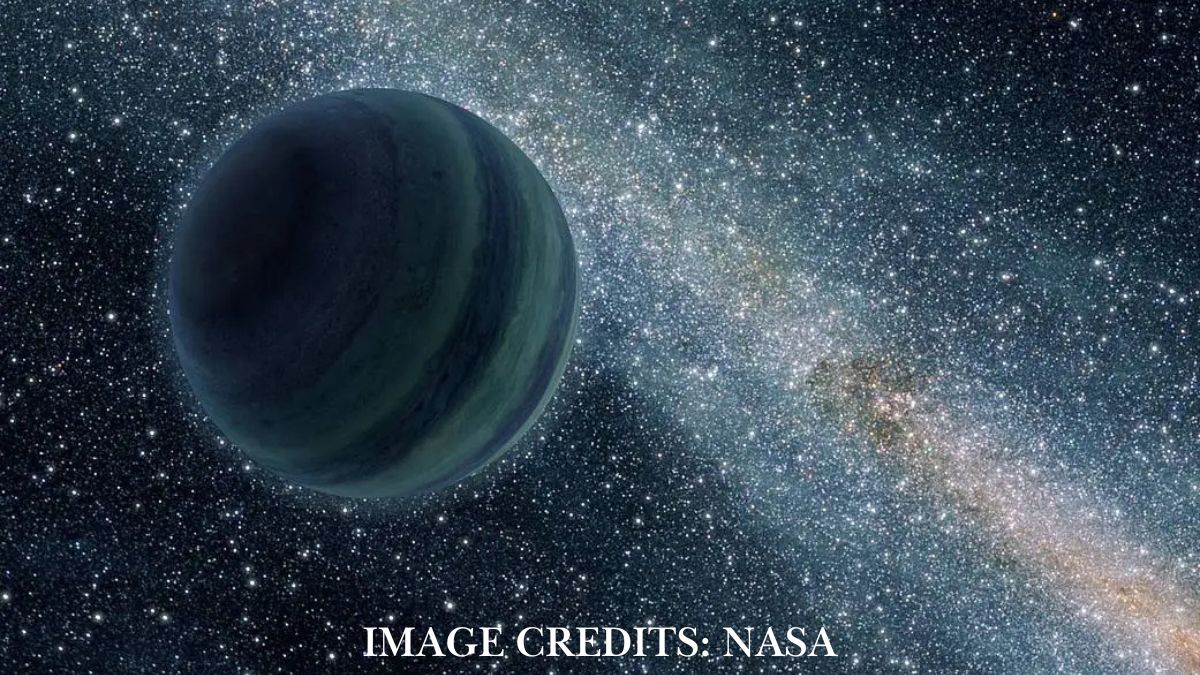
The James Webb Space Telescope has opened a new window into the hidden corners of our galaxy by revealing isolated, Jupiter-mass objects drifting freely through space. These nomad planets, also called rogue or free-floating planets, do not orbit any star. Instead, they travel alone through interstellar space, carrying with them the raw materials that could build their own companions. Recent observations in a young star-forming region have shown one such object surrounded by a disk of gas and dust, offering the first clear hints that it may be forming or already carrying a satellite.
Located in the Perseus Molecular Cloud roughly 960 light-years from Earth, these findings come from JWST’s deep infrared survey of the NGC 1333 cluster. The cluster itself is only 1 to 3 million years old, a cosmic nursery where stars, brown dwarfs, and planetary-mass objects are still taking shape. Among the six newly identified objects with masses between about 5 and 10 times that of Jupiter, one stands out because it hosts a visible disk. This disk is the kind of structure where moons and smaller planets commonly form around young stars, but here it belongs to a world without a parent star.
What does the presence of this disk mean for the possibility of a warm, structurally stable satellite traveling alongside such a nomad planet? The discovery raises exciting questions about how planets and moons can exist and evolve even in the complete absence of starlight.
What exactly is a nomad planet or rogue planet?
A nomad planet, sometimes called a rogue planet or free-floating planetary-mass object, is a world with a mass similar to Jupiter that does not orbit any star. These objects move independently through the galaxy, unbound by stellar gravity. According to observations published from the NASA/ESA/CSA James Webb Space Telescope program targeting NGC 1333, such objects can form directly from collapsing pockets of gas and dust in molecular clouds, much like stars do, but at much lower masses.
Jupiter itself has a mass of about 318 Earth masses. The objects found by JWST fall in the range of 5 to 10 Jupiter masses, placing them firmly in the giant-planet regime. They are too low in mass to burn hydrogen like true stars, yet they share formation pathways with both stars and planets. This makes them valuable laboratories for understanding the boundary between star formation and planet formation.
Many young rogue planets still retain significant internal heat left over from their formation. This heat can keep their atmospheres dynamic and, in some cases, allow geological or atmospheric activity long after they have left any star-forming region. Scientists compare them to Jupiter’s early history, but without the constant energy input from a nearby star.
How did JWST find these isolated planets in the Perseus Molecular Cloud?
JWST used its sensitive Near-InfraRed Imager and Slitless Spectrograph (NIRISS) instrument to peer through thick layers of dust that block visible light. The observations were part of program 1202, a deep spectroscopic survey of NGC 1333 led by researchers including Aleks Scholz. The infrared wavelengths allowed the telescope to detect the faint heat signatures of very low-mass objects that would be invisible to most other telescopes.
The team identified six planetary-mass objects in this single young cluster. The cluster lies about 960 light-years away in the constellation Perseus and is only 1 to 3 million years old. At this early stage, the objects are still warm from formation and easier to detect in infrared light. The results have been accepted for publication in the Astronomical Journal.
These detections add to earlier JWST findings of similar objects in other regions, such as pairs of Jupiter-mass objects in the Orion Nebula. The Perseus discoveries are especially valuable because one of the objects shows clear evidence of a surrounding disk, something rarely seen around such low-mass isolated bodies.
What makes the disk around one of these nomad planets so important?
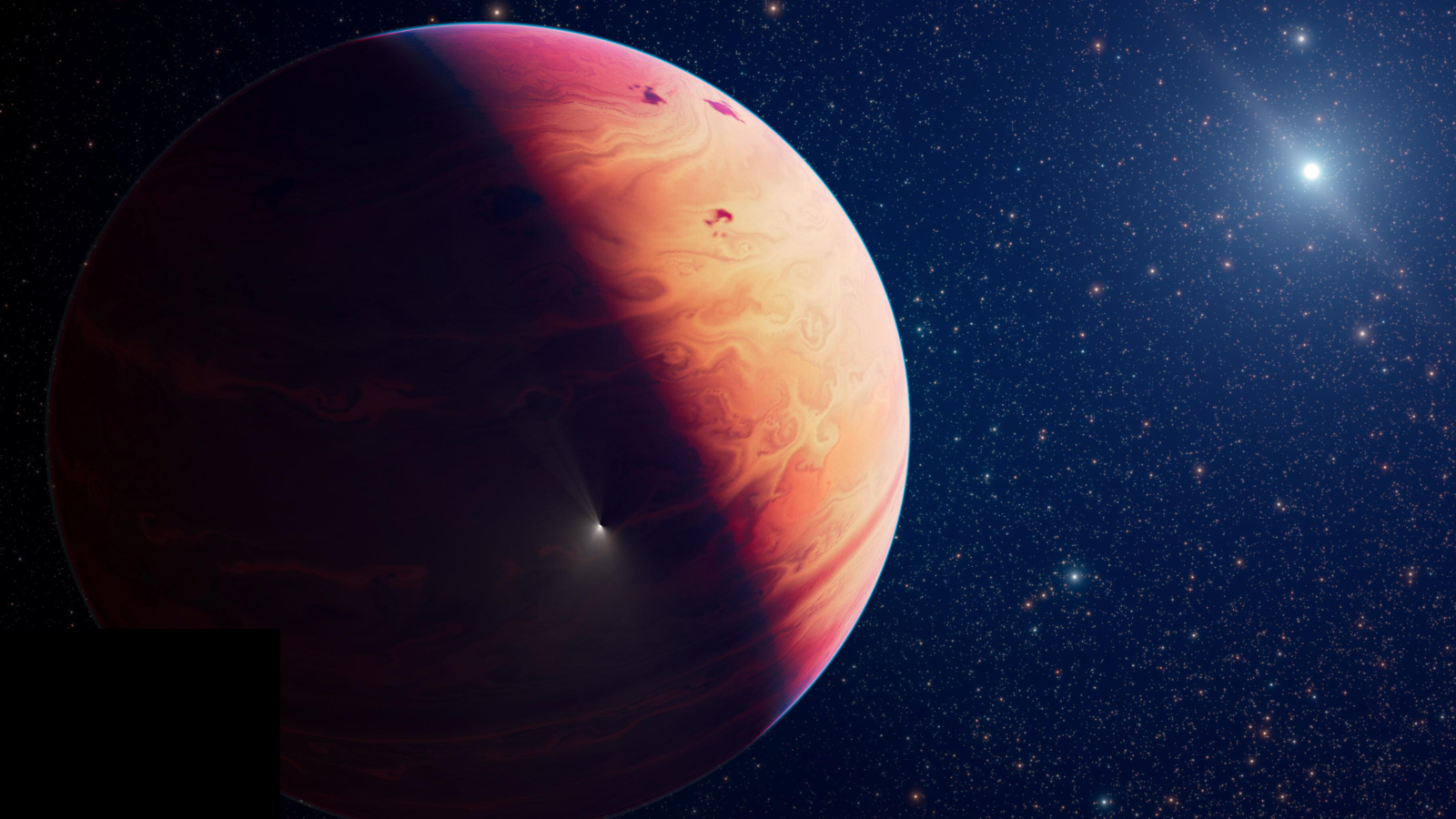
One of the six objects, the lowest-mass one detected with a disk, is encircled by a circumplanetary disk of gas and dust. This disk is visible in the JWST data and is the lightest such disk yet identified around a planetary-mass object. Disks like this are the birthplaces of moons and smaller planets around young stars, but seeing one around an isolated nomad planet is a major step forward.
The material in the disk can collide, stick together, and grow into larger bodies over time. Scientists expect that grain growth and crystallization processes similar to those seen in disks around stars are already underway. This means the nomad planet is not traveling completely alone; it carries the building blocks for future satellites.
The presence of the disk also helps astronomers understand how these objects formed. Objects that form like stars can retain disks, while objects ejected from star systems might lose them more easily. The disk around this particular nomad planet supports the idea that at least some of these worlds formed in place within the molecular cloud.
Could a satellite around a rogue planet be warm and structurally stable?
While JWST has not yet directly imaged a fully formed satellite around these specific objects, the disk provides strong evidence that moon formation is possible. Once a moon forms and settles into a stable orbit, several factors can help keep it warm even without starlight. Internal heat from the planet itself, residual formation heat, and tidal heating caused by gravitational flexing can all contribute.
Theoretical studies of exomoons around free-floating planets show that a thick hydrogen-rich atmosphere can trap heat effectively, while tidal forces from a close-in orbit can generate enough energy to maintain liquid water oceans for billions of years. The initial formation process inside the disk would also release heat through collisions and accretion, making any young satellite naturally warm during its early stages.
A structurally stable satellite would need a regular orbit that avoids being ejected or crashing into the planet. The disk environment helps moons form at safe distances where gravitational interactions can settle into stable configurations over time. Future observations with JWST and other telescopes may one day directly detect such companions or confirm ongoing moon formation in these disks.
What does this discovery mean for our understanding of planet and moon formation?
This JWST discovery shows that the processes that build planets and moons are more flexible than previously thought. Planetary-mass objects can form with their own disks and potentially their own satellite systems, even when completely separated from any star. This expands the possible environments where moons, and perhaps even conditions suitable for life, might exist.
The findings also provide new clues about star formation itself. The same physical processes that create stars appear to continue down to much lower masses, producing these isolated giants. By studying the chemistry and structure of the disks, astronomers can learn how dust grows into pebbles, rocks, and eventually moons across a wide range of environments.
These nomad planets and their potential satellites represent a new population of worlds that future missions may target. Their isolation makes them excellent targets for studying atmospheric chemistry and internal heat without interference from a bright host star.
Conclusion
JWST’s observations of NGC 1333 have revealed that isolated Jupiter-mass nomad planets can carry disks capable of forming satellites, expanding our view of how planetary systems can arise in the galaxy. One particular object stands out with its disk, offering a direct look at the early stages of moon formation around a world that has no star to call home. These discoveries remind us that the universe contains many more types of planetary systems than we once imagined.
Could future telescopes one day detect the light or atmospheres of moons orbiting these wandering giants, revealing entirely new chapters in the story of planetary evolution?
Sources
European Space Agency. (2024). Peeking into Perseus. ESA/Webb. https://esawebb.org/images/potm2408a/
Scholz, A., Muzic, K., Langeveld, A., & Jayawardhana, R. (2024). Webb’s deep survey of NGC 1333: Discovery of planetary-mass objects and disks (accepted). The Astronomical Journal.
NASA. (n.d.). James Webb Space Telescope mission pages and related exoplanet and rogue planet research. https://science.nasa.gov/mission/webb/