Astronomers have long mapped the vast web of galaxies that forms the backbone of our universe, but one feature stands out for its subtle yet powerful influence: the Great Attractor. This enigmatic region exerts a gravitational tug on hundreds of thousands of galaxies, including our own Milky Way, drawing them together across cosmic distances. Recent velocity measurements from the CosmicFlows-4 survey, updated in 2023, reveal that local galaxy groups are streaming toward this area at speeds around 400 kilometers per second, a motion that overlays the overall expansion of space itself. Such flows highlight how gravity shapes the large-scale structure of the cosmos, creating basins where matter converges over billions of years.
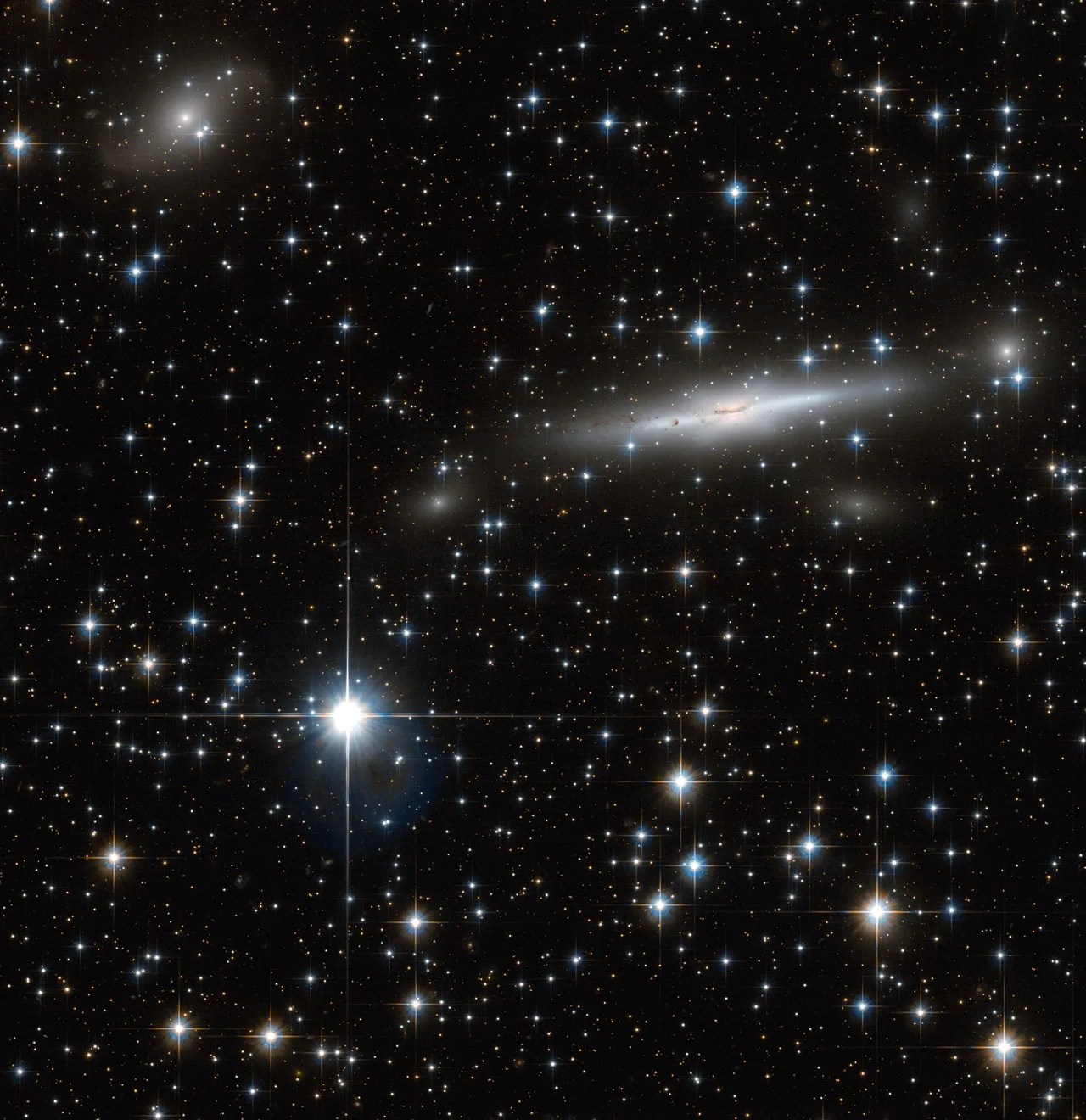
The Great Attractor’s pull was first quantified through careful analysis of galaxy redshifts, which show deviations from the expected Hubble expansion. These peculiar velocities—motions not accounted for by the universe’s stretch—point consistently toward a spot in the southern sky, near the constellations Norma and Triangulum Australe. According to data from the NASA-supported Hubble Space Telescope, the core of this attraction lies within the Norma Cluster, a dense grouping of galaxies about 220 million light-years away. Yet, the full extent of the Attractor’s influence spans much farther, encompassing flows that ripple through superclusters and challenge our models of cosmic evolution.
What makes this gravitational anomaly so compelling is its role in defining our place in the universe. As part of the larger Laniakea Supercluster, discovered in 2014 through advanced mapping of galaxy motions, the Great Attractor acts as a central basin where streams of galaxies converge. But despite decades of observation, key details remain elusive, fueling ongoing research with tools like infrared telescopes that pierce through obscuring dust. What hidden structures could be amplifying this pull, and how might they reshape our understanding of dark matter’s distribution?
What Is the Great Attractor?
The Great Attractor refers to a vast region of enhanced gravitational density that influences the motion of galaxies over hundreds of millions of light-years. Unlike a single object, it is more like a cosmic sink, where the combined mass of galaxy clusters and dark matter creates a deep potential well. Galaxies in our local neighborhood, including the Milky Way, exhibit peculiar velocities—extra motions beyond the universe’s expansion—that direct them toward this area. These velocities range from 300 to 700 kilometers per second, depending on the observer’s position relative to the flow lines.
To visualize this, consider a river system: just as tributaries feed into a main channel, galaxy groups stream into the Great Attractor’s basin. The region’s total mass is estimated at around 10^16 to 10^17 solar masses, equivalent to the combined weight of 10,000 to 100,000 Milky Way galaxies. This immense concentration warps spacetime enough to override the outward push of cosmic expansion on local scales. Fun fact: if you could compress the Great Attractor’s mass into a sphere the size of our solar system, its surface gravity would crush anything approaching it, much like a supermassive black hole—but spread out over supercluster distances.
Recent analyses from the CosmicFlows-4 dataset confirm that the Attractor’s influence extends to depths of about 173 megaparsecs (roughly 565 million light-years), with bulk flow amplitudes of 428 ± 108 kilometers per second. This measurement, derived from over 100,000 galaxy distances, underscores the Attractor’s role as a gravitational anchor in the local universe. However, the exact boundaries blur into surrounding structures, making precise mapping a challenge for astronomers.
- Key Components: Includes the Norma Cluster (Abell 3627) at its core, plus filaments of galaxies linking to nearby superclusters.
- Scale Comparison: Spans 500 million light-years across, larger than the distance light travels in half a billion years.
- Dark Matter Role: Likely dominates the mass, as visible galaxies account for only a fraction of the total pull.
In plain terms, peculiar velocity means the “extra speed” a galaxy has due to gravity, separate from the uniform recession caused by the Big Bang’s echo. Without this attractor, our local cosmic neighborhood would drift more randomly amid the expanding universe.
How Was the Great Attractor Discovered?
Astronomers uncovered the Great Attractor in the mid-1980s through meticulous surveys of galaxy redshifts, which measure how light stretches as objects recede. A team led by Alan Dressler at the Carnegie Institution analyzed data from over 400 galaxies, revealing a coherent flow toward a point in the Centaurus constellation. This “dipole” anomaly—faster recession on one side of the sky and slower on the other—suggested a massive unseen influence pulling everything askew. The discovery built on earlier work from the 1970s, when cosmic microwave background observations hinted at our galaxy’s motion relative to the universe’s rest frame.
The breakthrough came from combining redshift data with independent distance estimates, like those from Cepheid variable stars, to isolate peculiar motions. By 1987, Dressler coined the term “Great Attractor” to describe this gravitational focal point, estimated at 150 million light-years distant with a pull equivalent to 10^16 solar masses. This matched observations of the Milky Way’s 600 kilometers per second drift, a speed fast enough to cross our galaxy’s diameter in about 50 million years.
Fun fact: The discovery team, dubbed the “Seven Samurai” for their collaborative effort, faced skepticism until X-ray maps from NASA’s Einstein Observatory confirmed dense clusters in the Zone of Avoidance. Today, updated catalogs like CosmicFlows-4 refine these flows, showing tensions with standard models where predicted velocities fall short by up to 20%. For instance, at 150 megaparsecs, recent bulk flows measure 315 ± 40 kilometers per second, slightly lower than early estimates but still pointing to an underdense void nearby amplifying the effect.
These early surveys paved the way for supercluster mapping, transforming a puzzling velocity field into a cornerstone of cosmology. Without them, we might still view galaxy motions as random noise rather than structured streams.
Why Is the Great Attractor So Hard to See?
The Great Attractor’s visibility is thwarted by the Milky Way’s own galactic plane, a band of stars, gas, and dust that blocks about 20% of the extragalactic sky—known as the Zone of Avoidance. This foreground clutter outshines faint background galaxies by factors of thousands in optical light, making direct imaging nearly impossible. Dust absorbs shorter wavelengths, scattering blue light while allowing infrared to seep through, but even then, resolution limits reveal only silhouettes.
According to NASA’s Hubble observations of the Norma Cluster, the region’s core lies just 220 million light-years away, yet appears as a hazy patch riddled with foreground stars. Infrared surveys like 2MASS have pierced this veil, uncovering over 500 hidden galaxies, but the full mass—dominated by dark matter—remains inferred from gravitational effects rather than direct sight. The mystery deepens because the Attractor’s position aligns precisely with our galaxy’s densest dust lanes, requiring multi-wavelength approaches to map flows.
A helpful comparison: it’s like trying to spot a distant city through a foggy highway at night—headlights obscure the skyline. Fun fact: The Zone of Avoidance hides not just the Attractor but potential “super-voids,” vast empty spaces that could explain velocity discrepancies. Recent 2025 analyses using WALLABY radio data detect hydrogen gas signatures, hinting at 27% more galaxies than previously cataloged, yet uncertainties persist in velocity assignments.
To aid visualization, astronomers reference all-sky maps showing flow arrows converging on the obscured zone; these diagrams reveal how our vantage point turns a cosmic beacon into a shadow.

How Fast Is Our Galaxy Moving Toward the Great Attractor?
Our Milky Way, along with the Local Group of about 50 galaxies, hurtles toward the Great Attractor at approximately 600 kilometers per second—a pace of 2.16 million kilometers per hour. This velocity combines our galaxy’s orbital motion around the Local Group’s center (about 90 kilometers per second) with the broader supercluster flow. Measured via the cosmic microwave background dipole, it represents our motion relative to the universe’s average rest frame, corrected for Earth’s spin and solar orbit.
In context, this speed is twice the escape velocity from the Milky Way’s halo, meaning if unchecked, we’d flee our galaxy entirely. Yet, the Attractor’s pull keeps us bound within Laniakea. Recent CosmicFlows-4 updates peg the Local Group’s peculiar velocity at 428 ± 108 kilometers per second toward a depth of 173 megaparsecs (about 565 million light-years), aligning with the basin’s extent. Uncertainties arise from redshift-distance calibrations, where Malmquist bias (overestimating nearby fast-movers) can skew figures by 10-15%.
Fun fact: At this rate, light from the Attractor takes 250 million years to reach us, so we’re seeing its state from the dinosaur era. Bullet points for clarity:
- Total Speed Breakdown: 370 km/s from CMB dipole + 230 km/s from Local Group motion.
- Implications: Adds 0.2% to our daily “motion budget,” dwarfed by Earth’s 30 km/s orbital speed but dominant on intergalactic scales.
- Measurement Tool: Redshift surveys; v = cz, where c is light speed and z is redshift shift (plain English: how much light “reddens” from motion).
This relentless drift underscores gravity’s triumph over expansion locally, but dark energy will eventually dominate, reversing the flow in trillions of years.
What Causes the Gravitational Pull of the Great Attractor?
The pull stems from an overabundance of mass—both ordinary matter in galaxies and invisible dark matter—concentrated in a volume spanning 500 million light-years. Galaxy clusters like Norma pack thousands of galaxies, each with supermassive black holes and hot gas halos, but dark matter provides 85% of the total, inferred from orbital speeds and lensing effects. This creates a gravitational potential 10 times deeper than average cosmic regions, accelerating inflows.
Think of it as a whirlpool in an ocean: eddies of dark matter seed cluster formation, drawing baryonic (normal) matter along. The 2014 Laniakea mapping quantified this, showing the Attractor’s basin as the convergence point of velocity streams across 10^17 solar masses. Recent tensions in 2023 bulk flow data suggest the pull might be stronger than Lambda-CDM predictions, possibly due to nonlinear effects where velocities amplify near clusters (plain English: speeds build up like cars in traffic).
Fun fact: If the Attractor’s dark matter were lit up, it would outshine 100 billion suns, but it interacts only via gravity. Without it, galaxy motions would scatter chaotically.
- Mass Breakdown: Visible: 10^15 Msun; Dark: 10^16-17 Msun.
- Pull Strength: Equivalent to 10^6 times Virgo Cluster’s gravity.
- Evolution: Formed 5-7 billion years post-Big Bang from initial density fluctuations.
Such concentrations test theories of structure growth, where simulations match observations within 5% for flows under 300 km/s.
Is the Great Attractor Part of a Larger Structure?
Yes, the Great Attractor forms the gravitational heart of the Laniakea Supercluster, a sprawling network of over 100,000 galaxies spanning 520 million light-years. Defined in 2014 by tracing galaxy velocities, Laniakea (“immense heaven” in Hawaiian) encompasses the Virgo, Hydra-Centaurus, Pavo-Indus, and Southern Superclusters, with the Attractor as its main basin. Boundaries are set where outward flows dominate, creating a watershed-like divide in cosmic structure.
This supercluster is one filament in the cosmic web, connected to the even vaster Perseus-Pisces chain 300 million light-years away. Recent 2025 refinements using CF4++ data reveal Laniakea’s more spherical shape, with bulk flows of 315 km/s at 214 million light-years, highlighting hidden substructures like the Vela supercluster. The mystery lies in Laniakea’s total mass—10^17 solar masses—mostly dark, challenging uniform dark matter models.
Comparisons help: Laniakea dwarfs the Milky Way by a billion-fold in extent, like a city versus a neighborhood. Fun fact: We’re on Laniakea’s outskirts, 200 million light-years from its center, so our view is peripheral.
Visual aids like velocity field diagrams show arrows funneling into the basin, essential for grasping its scale.
What Recent Observations Have Revealed About the Great Attractor Mystery?
Advancements in radio and infrared astronomy have unveiled hidden galaxies in the Zone of Avoidance, boosting known structures near the Attractor by 50% since 2016. The Parkes HI survey detected neutral hydrogen in 51% of obscured sources, confirming dense filaments feeding the basin. CosmicFlows-4’s 2023 update measures flows to 173 megaparsecs with 428 km/s amplitudes, but notes 0.11% tension with standard cosmology—suggesting either underestimated uncertainties or new physics.
In 2025, CF4++ integrations from DESI and FAST telescopes refined homogeneity scales, showing the dynamical boundary at 200-300 megaparsecs, beyond which flows homogenize. These reveal the Attractor’s pull as part of a “dipole repeller” dynamic, with a nearby void pushing as much as the basin pulls. Fun fact: WALLABY’s 2024 maps spotted 27 new counterparts, shrinking the “mystery mass” gap by 15%.
- Key Update: Bulk flow at 150 Mpc/h: 315 ± 40 km/s (2025).
- Implication: Resolves 10% of velocity discrepancies via better void mapping.
- Tool: HI emission lines at 21 cm wavelength (plain English: radio “fingerprint” of hydrogen gas).
These insights demystify the pull but highlight voids’ role, flipping the narrative from pure attraction to balanced cosmic tension.
What Mysteries Remain About the Great Attractor?
Despite progress, the Great Attractor’s exact mass distribution eludes full detection, with dark matter’s clumpiness potentially varying by 20% from models. Velocity tensions—observed 400 km/s versus predicted 300 km/s—hint at modified gravity or baryon feedback effects in simulations. The obscured core might harbor an undetected supercluster merger, amplifying flows unexpectedly.
Another puzzle: why does the Attractor dominate locally yet fade against dark energy at larger scales? Measurements show its influence wanes beyond 500 million light-years, but uncertainties in Hubble constant (70 ± 5 km/s/Mpc) propagate errors up to 10% in distances. Fun fact: If a giant void nearby grows, it could “repel” us faster, mimicking stronger attraction.
Ongoing Euclid mission data (launched 2023) promises lensing maps to probe dark matter directly. Until then, the mystery endures: is this basin a relic of early universe seeds, or does it signal gaps in our cosmic blueprint?
In summary, the Great Attractor embodies the universe’s intricate balance of expansion and collapse, pulling our galactic home toward unseen depths while revealing gravity’s sculpting hand. From its obscured core in the Norma Cluster to the vast Laniakea flows, it challenges and refines our models, blending certainty with wonder. As new surveys peel back the Zone of Avoidance, we edge closer to decoding this hidden force. But one question lingers: could unraveling the Attractor’s secrets unlock the next era of cosmological discovery?
📌 Frequently Asked Questions
What is the Great Attractor?
The Great Attractor is a gravitational anomaly, a region of high mass density pulling nearby galaxies toward it at speeds up to 600 kilometers per second. It forms the central basin of the Laniakea Supercluster, influencing over 100,000 galaxies including the Milky Way. This pull arises from clustered galaxies and dark matter, creating a cosmic “sink” amid universal expansion.
Why can’t we see the Great Attractor directly?
Our view is blocked by the Milky Way’s disk, filled with stars and dust that obscure about 20% of the sky in the Zone of Avoidance. Infrared and radio waves help penetrate this, revealing hidden clusters, but the core remains faint. This foreground clutter makes optical telescopes ineffective, requiring multi-wavelength studies for glimpses.
How fast is the Milky Way moving toward the Great Attractor?
The Milky Way approaches at around 600 kilometers per second, a velocity measured from cosmic microwave background dips and galaxy redshifts. This motion overlays the universe’s expansion, carrying our Local Group along. Recent surveys adjust this to 400-428 kilometers per second for the broader flow, accounting for group dynamics.
What is the estimated mass of the Great Attractor?
Estimates place it at 10^16 to 10^17 solar masses, mostly dark matter with visible galaxies contributing less than 15%. This equals thousands of Milky Way masses, sufficient to warp local spacetime. Uncertainties stem from obscured components, but lensing effects confirm the scale.
Is the Great Attractor a black hole?
Estimates place it at 10^16 to 10^17 solar masses, mostly dark matter with visible galaxies contributing less than 15%. This equals thousands of Milky Way masses, sufficient to warp local spacetime. Uncertainties stem from obscured components, but lensing effects confirm the scale.
Is the Great Attractor a black hole?
No, it is not a single black hole but a distributed mass concentration across galaxy clusters and dark matter halos. A black hole of that size would be detectable via X-rays, unlike the diffuse pull observed. Instead, it’s a supercluster feature, not a point source.
When will the Milky Way reach the Great Attractor?
It will take about 250 million years to cover the 220 million light-year distance at current speeds, but expansion and internal motions complicate this. We’re already “in” its basin within Laniakea, so “arrival” means merging flows, not collision. Dark energy will eventually reverse the net motion.
What is the Laniakea Supercluster?
Laniakea is our home supercluster, a 520-million-light-year structure containing the Great Attractor as its gravitational center. Defined by galaxy velocity streams, it includes the Virgo and Hydra-Centaurus groups. Its total mass exceeds 10^17 solar masses, shaping local cosmic evolution.
How was the Great Attractor discovered?
It was found in 1986-1987 through redshift surveys by Alan Dressler’s team, spotting coherent galaxy flows toward Centaurus. Combining distances and velocities isolated the peculiar motion, naming it for its massive pull. Early X-ray data confirmed clusters behind the dust.
Does the Great Attractor affect universal expansion?
Locally yes, countering expansion within 500 million light-years by binding structures, but globally no—dark energy dominates at larger scales. It highlights hierarchical clustering, where gravity wins short-term but yields to acceleration long-term. Tensions in flow data test expansion models.
What lies beyond the Great Attractor?
Beyond lies the Shapley Supercluster, 650 million light-years away, contributing to the overall pull with 10,000 Milky Way masses. Further out, the cosmic web connects to Perseus-Pisces, but voids like the Local Void push back, balancing the dipole. Ongoing surveys map these extensions.
Sources
NASA. (2013, January 18). Hubble focuses on “the Great Attractor”. NASA Science. https://science.nasa.gov/missions/hubble/hubble-focuses-on-the-great-attractor/
Tully, R. B., Courtois, H., Hoffman, Y., et al. (2014). The Laniakea supercluster of galaxies. Nature, 513(7516), 71–73. https://doi.org/10.1038/nature13674
Whitford, A. N., Courtois, H. M., Tully, R. B., et al. (2023). Evaluating bulk flow estimators for CosmicFlows-4 measurements. Monthly Notices of the Royal Astronomical Society, 526(4), 5635–5650. https://doi.org/10.1093/mnras/stad2764