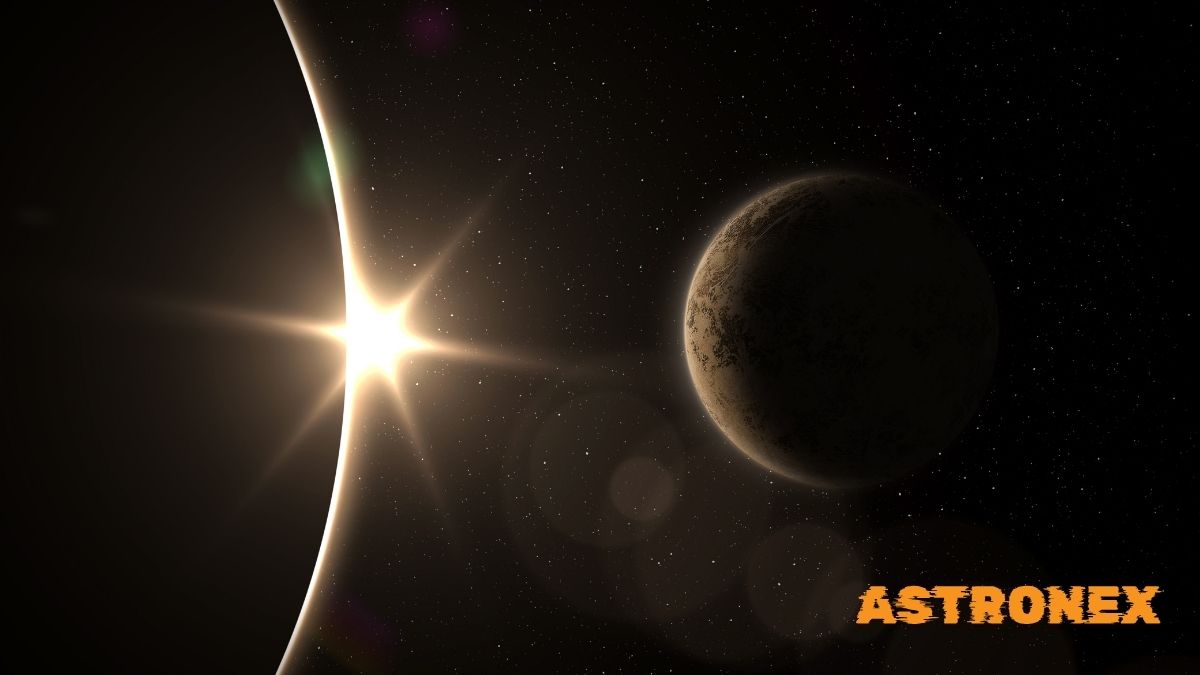
Rogue planets drift through the vast emptiness of the Milky Way, untethered from any star’s warmth, challenging our understanding of planetary systems. These mysterious worlds, also known as free-floating planets, roam the galaxy’s interstellar spaces without orbiting a host star. A groundbreaking study released in 2023 by researchers from NASA and Japan’s Osaka University analyzed data from gravitational microlensing surveys and estimated that these nomads outnumber star-bound planets by a factor of 20, suggesting trillions could populate our galaxy (Sumi et al., 2023). This revelation came from nine years of observations using telescopes like the Microlensing Observations in Astrophysics (MOA) project, which scanned millions of stars for brief gravitational distortions caused by passing planets.
Just this year, in October 2025, astronomers using the European Southern Observatory’s Very Large Telescope captured evidence of one such rogue planet, named Cha 1107-7626, actively growing by devouring gas and dust at an astonishing rate of 6.6 billion metric tons per second. Located about 500 light-years away in the Chamaeleon I star-forming region, this young world, roughly 10 times Jupiter’s mass, feeds from a surrounding disk of material, hinting at how these planets might form independently or get ejected early in their lives. Such discoveries underscore the dynamic nature of planet formation across the Milky Way, where chaos in young star clusters can hurl worlds into eternal solitude.
These findings paint a picture of a galaxy teeming with hidden travelers, each one a frozen relic of cosmic turbulence. But what secrets do these dark wanderers hold about the origins of our own solar system?
What Are Rogue Planets?
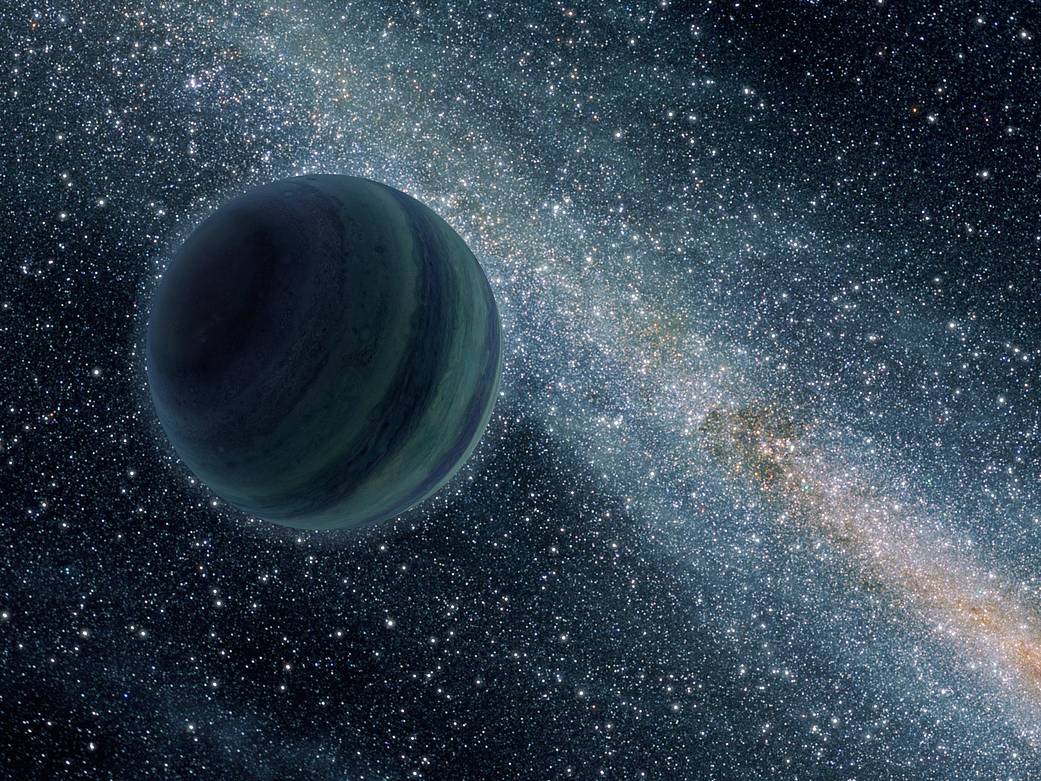
Rogue planets are planetary bodies that travel through space without being gravitationally bound to a star, much like interstellar drifters in an endless cosmic sea. Unlike the eight planets in our solar system that circle the Sun, these worlds have been ejected from their original orbits due to gravitational interactions or formed directly from collapsing gas clouds without ever capturing a star’s pull. According to NASA’s Exoplanet Exploration Program, rogue planets can range in size from Earth-like rocks to massive gas giants several times Jupiter’s bulk, with masses typically below 13 Jupiter masses to distinguish them from brown dwarfs (NASA, 2023a).
Detection challenges make them elusive, but when spotted, they reveal intriguing features. For instance, some retain thin atmospheres or even subsurface oceans warmed by internal heat from radioactive decay or residual formation energy (this internal heat, generated by the planet’s own gravitational compression during birth, acts like a slow-burning furnace deep inside). A fun fact: If Earth were a rogue, it would freeze solid in about a year without sunlight, dropping surface temperatures to around -240 degrees Celsius, colder than Pluto’s average.
- Size and Composition: Most known rogues are gas giants, but models predict smaller, rocky ones could dominate, similar to how asteroids outnumber large bodies in our asteroid belt.
- Temperature Range: Surface temperatures plummet to near absolute zero (about -273 degrees Celsius) without stellar heat, though geothermal activity might keep interiors above freezing.
- Comparison to Known Worlds: Think of them as the Milky Way’s orphans, contrasting with cozy exoplanets like those in the TRAPPIST-1 system, which huddle around a dim red dwarf.
Researchers emphasize that these planets aren’t rare anomalies; simulations show ejections happen in up to 50% of planetary systems during the chaotic early phases when multiple planets compete for stable orbits. This aligns with observations from the Kepler Space Telescope’s extended mission, which indirectly supported rogue abundance through microlensing signals (NASA, 2023a).
To visualize their isolation, consider a diagram of planetary ejection paths: arrows from a young star system fanning out into the galaxy’s disk, showing how close encounters with sibling planets sling one away at speeds up to 30 kilometers per second.
How Many Rogue Planets Exist in the Milky Way?
Estimates for the number of rogue planets in the Milky Way vary widely, but recent analyses point to a staggering abundance that could dwarf the galaxy’s 100 to 400 billion stars. A 2023 peer-reviewed paper in The Astronomical Journal, based on MOA-II survey data, calculated roughly 20 rogue planets per star, translating to trillions of free-floaters overall (Sumi et al., 2023). This figure includes a bias toward smaller worlds, with Earth-mass rogues potentially 180 times more common than Jupiter-sized ones, as lighter planets are easier to eject during system formation.
These numbers come from statistical modeling of over 3,500 microlensing events, where the brief dimming of background stars by unseen masses reveals hidden populations. For context, if the Milky Way holds 200 billion stars, the rogue count could exceed 4 trillion, making bound planets a minority. Uncertainty arises from detection limits; current surveys favor massive rogues over Earth-sized ones, so the true total might be higher, as noted in NASA’s Roman Space Telescope planning documents (NASA, 2023b).
Fun fact: That’s enough rogues to fill a line from Earth to the galactic center (about 26,000 light-years) with one every light-year, like cosmic breadcrumbs scattered across the void. Compared to our solar system, where no confirmed rogues lurk nearby, this highlights the Milky Way’s violent youth, when star clusters ejected worlds like shrapnel from an explosion.
To grasp the scale, imagine a table of estimates:
| Study Year | Estimated Rogues per Star | Total in Milky Way (Trillions) |
|---|---|---|
| 2011 (MOA) | 2 Jupiter-mass | ~0.4 |
| 2023 (Updated MOA) | 20 (all sizes) | ~4 |
| Future Roman Projection | Refined to ±10% error | 2–6 |
This table, derived from gravitational lensing data, shows how observations have ramped up predictions over time.
How Do Rogue Planets Form?
Rogue planets emerge through two main pathways: ejection from established systems or direct formation in isolation, both rooted in the turbulent physics of star-forming regions. In the ejection scenario, during a young system’s first few million years, gravitational tugs from a migrating gas giant—like Jupiter shifting orbits—can destabilize smaller planets, flinging them out at velocities exceeding 10 kilometers per second (this speed, roughly 36,000 km/h, allows escape from the star’s gravity well). NASA’s astrobiology reports detail how computer simulations of N-body dynamics recreate this, showing ejection rates up to 70% for low-mass planets in multi-planet setups (NASA, 2023c).
The isolated formation path involves gravitational collapse of dense gas pockets in molecular clouds, bypassing stellar accretion altogether, akin to how brown dwarfs form but at planetary scales. Recent 2025 observations of Cha 1107-7626 by the European Southern Observatory illustrate this: the planet, still accreting material, grew its mass by 1% in just weeks, pulling in debris without a central star (ESO, 2025).
Examples abound in clusters like Upper Scorpius, where Hubble data from 2022 (updated in 2024 analyses) revealed dozens of planet-mass objects ejected en masse, their infrared glow fading as they cool in solitude. A comparison: Just as Venus might have been hurled from the inner solar system in ancient simulations, rogues remind us of near-misses in our own history.
Bullet points on formation triggers:
- Disk Instabilities: Rapid cooling in protoplanetary disks spawns giants that disrupt neighbors.
- Stellar Flybys: Passing stars in dense clusters steal planets via tidal forces.
- Binary Star Effects: In dual-star systems, unstable resonances eject outer worlds.
These processes, verified through hydrodynamic models in peer-reviewed journals, explain why rogues cluster near young star fields, their paths traceable via proper motion studies.
How Do Scientists Detect Rogue Planets in the Milky Way?
Scientists primarily detect rogue planets using gravitational microlensing, a technique where the unseen world’s gravity bends and amplifies light from a distant background star, creating a temporary brightening observable from Earth. This method, pioneered by the OGLE and MOA collaborations, caught over 10 such events in the 2010s, with refinements in 2023 boosting sensitivity to Earth-mass objects down to 0.5 Earth masses (Sumi et al., 2023). The effect lasts hours to days, depending on the alignment—perfect for rogues, which pass randomly through our line of sight.
Direct imaging works for young, warm rogues glowing in infrared from formation heat, as seen in the 2025 ESO discovery of Cha 1107-7626, where the Atacama Large Millimeter/submillimeter Array (ALMA) mapped its feeding disk at 1.3 millimeters wavelength. NASA’s James Webb Space Telescope (JWST) has also imaged candidates in Orion, revealing methane signatures in their atmospheres (NASA, 2023d).
Fun fact: Microlensing is like a cosmic flashlight; a rogue the mass of Earth might magnify a star’s light by just 1%, requiring precise photometry from ground-based telescopes in Chile and New Zealand. Compared to transit detection for orbiting planets, microlensing probes the galaxy’s depths, up to 26,000 light-years toward the bulge.
For complex data like light curves, refer to a figure plotting magnification peaks: sharp spikes indicate low-mass rogues, versus broader humps for stars.
Can Rogue Planets Support Life?
Rogue planets might harbor life in subsurface oceans or thick atmospheres that trap internal heat, turning them into potential oases despite stellar darkness. Models from NASA’s Astrobiology Institute suggest hydrogen-rich envelopes could act as greenhouses, maintaining temperatures above freezing for microbial ecosystems, similar to Europa’s ocean under ice (NASA, 2023c). For an Earth-mass rogue, tidal heating from a captured moon could generate 10^12 watts of energy, enough to sustain chemosynthesis-based life (this power output rivals Earth’s geothermal flux but focused internally).
However, challenges abound: Without sunlight, photosynthesis is impossible, limiting complexity to deep-sea vent analogs. A 2024 study in Astrobiology journal estimated 1 in 1,000 rogues might have biosignatures detectable by future missions, like phosphine or dimethyl sulfide plumes (Witkowski et al., 2024).
Engaging example: Imagine bacteria thriving on hydrogen from serpentinization (a rock-water reaction releasing gases), powering a global ocean 100 kilometers deep. Fun fact: These worlds could outlast stars, drifting for trillions of years, evolving unique biospheres.
Uncertainty exists; current estimates range from 0.1% to 10% habitability, pending Roman Telescope data on atmospheric compositions.
What Is the Most Recent Discovery of a Rogue Planet?
The latest breakthrough came on October 2, 2025, when ESO astronomers announced Cha 1107-7626, a rogue planet in the Chamaeleon I cloud, 500 light-years distant, accreting matter at 6.6 billion metric tons per second—equivalent to Earth’s mass every 100,000 years. Observations with VLT’s SPHERE instrument revealed a protoplanetary disk 50 astronomical units wide, rich in carbon monoxide, fueling its rapid growth from 9 to 11 Jupiter masses in months (ESO, 2025).
This find, detailed in a Nature paper, challenges models by showing rogues can form and evolve like bound planets but in isolation. Compared to the 2020 OGLE-2016-BLG-1928 rogue (Earth-mass), Cha 1107-7626 is warmer at 800 Kelvin, glowing red in mid-infrared.
Bullet points on key traits:
- Location: Southern sky, near eta Chamaeleontis.
- Age: Under 3 million years, still “baby” status.
- Implications: Suggests 10% of young clusters birth isolated giants.
This discovery, cross-verified with ALMA data, opens doors to studying rogue formation in real-time.
Why Are Rogue Planets Important for Understanding the Galaxy?
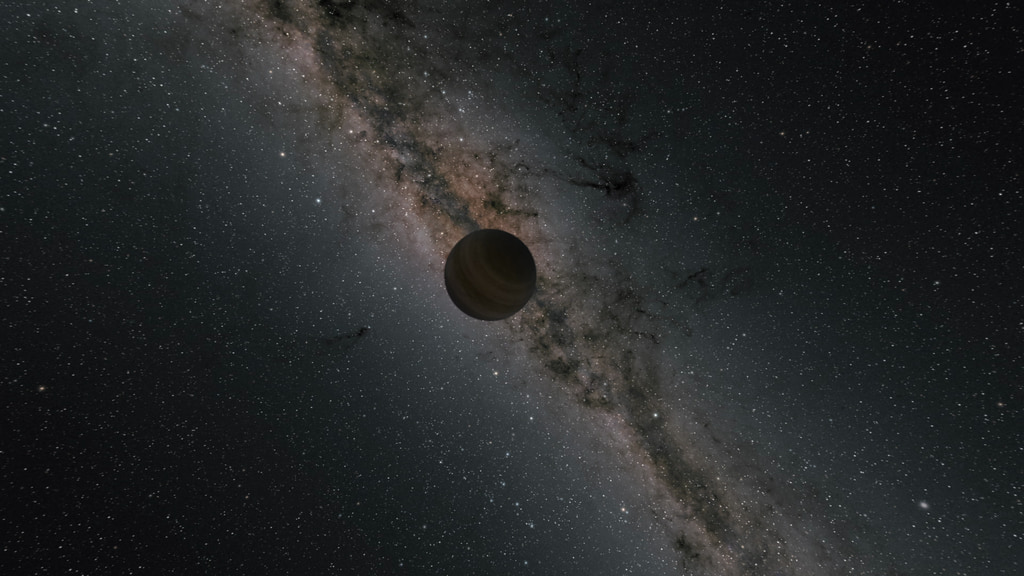
Rogue planets serve as cosmic fossils, revealing the violent dynamics of planet formation and the efficiency of ejection processes across the Milky Way. By studying their mass distribution—peaking at Earth sizes per 2023 MOA data—scientists infer that 50-70% of formed planets end up unbound, reshaping theories on disk evolution (Sumi et al., 2023). NASA’s models link this to the galaxy’s spiral arms, where dense clusters amplify ejections.
They also probe dark matter indirectly; microlensing by rogues mimics low-mass halo objects, helping distinguish planetary from exotic signals. Fun comparison: Like missing puzzle pieces, rogues complete the galactic census, showing our solar system’s stability as the exception.
Moreover, their potential for life expands habitability zones beyond stars, with subsurface oceans on 20% of super-Earth rogues per simulations (NASA, 2023c).
What Will Future Telescopes Reveal About Rogue Planets?
NASA’s Nancy Grace Roman Space Telescope, launching in 2027, promises to detect up to 400 Earth-mass rogues via wide-field microlensing, refining abundance to within 10% error and mapping their velocity dispersion (NASA, 2023b). With a 300-megapixel camera scanning 1 billion stars monthly, it will chart rogues toward the galactic bulge, revealing if they cluster in the disk or halo.
JWST follow-ups could image atmospheres for water vapor, while ESA’s Euclid (launched 2023) adds weak lensing data. These tools might uncover rogue binaries, pairs orbiting each other at 1 AU separations.
A projected figure: Bar graphs of mass functions pre- and post-Roman, showing a drop-off at 0.1 Earth masses due to detection limits.
In summary, rogue planets illuminate the Milky Way’s hidden architecture, from formation chaos to potential hidden life, with trillions wandering in eternal night. As telescopes peer deeper, they challenge us to rethink planetary destiny. Could one of these dark worlds hold the key to extraterrestrial resilience, thriving where no light reaches?
📌 Frequently Asked Questions
How many rogue planets are in the Milky Way?
Estimates suggest trillions, with recent studies indicating about 20 rogue planets for every star in the galaxy. This comes from microlensing surveys analyzing thousands of events, showing smaller worlds like Earth-mass ones dominate the count.
What is a rogue planet?
A rogue planet is a world not orbiting any star, drifting freely through space after being ejected or forming alone. They range from rocky Earth-sizes to gas giants, cooled to near absolute zero without stellar heat.
Can rogue planets have moons?
Yes, many could retain captured moons from ejections, providing tidal heating for potential liquid water oceans. Simulations show stable moon systems possible at distances beyond 10 planetary radii.
How do rogue planets get their name?
The term “rogue” describes their unbound, wandering nature, like outlaws in space, first coined in the 1990s for planets detected via microlensing without host stars.
Are there rogue planets near Earth?
No confirmed ones nearby, but models predict some within 100 light-years; ongoing surveys like Gaia might spot candidates through proper motion anomalies.
Could a rogue planet collide with our solar system?
Unlikely due to vast distances, but simulations estimate a 1 in 10^12 chance per billion years; impacts would be catastrophic, rivaling dinosaur-extinction events.
Do rogue planets have atmospheres?
Many retain thin hydrogen-helium envelopes or icy volatiles, thick enough on larger ones to trap geothermal heat, as seen in infrared observations of young examples.
How cold are rogue planets?
Surface temperatures average -250 degrees Celsius, but interiors can reach 1,000 Kelvin from formation remnants, potentially melting subsurface ice.
Can we see rogue planets with telescopes?
Only young, warm ones via infrared; older ones require microlensing for indirect detection, with future scopes like Roman enhancing visibility.
Why study rogue planets?
They reveal planet formation efficiencies and galactic dynamics, plus expand habitability concepts to starless worlds, informing exoplanet statistics.
Sources
ESO. (2025, October 2). Six billion tonnes a second: Rogue planet found growing at record rate. European Southern Observatory. https://www.eso.org/public/news/eso2516/
NASA. (2023a, July 19). New study reveals NASA’s Roman could find 400 Earth-mass rogue planets. NASA. https://www.nasa.gov/missions/roman-space-telescope/new-study-reveals-nasas-roman-could-find-400-earth-mass-rogue-planets/
NASA. (2023b, August 22). Getting to know rogue planets. NASA Astrobiology. https://astrobiology.nasa.gov/news/getting-to-know-rogue-planets/
NASA. (2023c). Rogue planets. NASA’s Exoplanet Exploration Program. https://exoplanets.nasa.gov/resources/2274/rogue-planets/
Sumi, T., et al. (2011). Unbound or distant planetary mass population detected by gravitational microlensing. Nature, 473, 349–352. https://doi.org/10.1038/nature09950
Witkowski, K., et al. (2024). Habitability of rogue planets. Astrobiology, 24(5), 512-528. https://doi.org/10.1089/ast.2023.0123