In May 2024, NASA scientists announced a nearby rocky exoplanet (a planet orbiting another star) that is sized between Earth and Venus and close enough for detailed follow up science. In NASA’s TESS discovery report on Gliese 12 b, the planet is described as an unusually strong target because it orbits a bright, nearby red dwarf star, and it transits (passes in front of its star) in a way that lets astronomers probe its atmosphere (NASA, 2024).
The planet is named Gliese 12 b, and it sits about 40 light years away. NASA reports that it receives about 1.6 times the energy Earth gets from the Sun, which is about 85 percent of what Venus receives in our own solar system (NASA, 2024). That single detail makes scientists pay attention, because a small difference in starlight and atmosphere can decide whether a rocky planet stays mild, or turns into a Venus style runaway greenhouse.
This is why some researchers and space writers use a nickname like venus 2.0: not because it is officially “a second Venus,” but because it may be a close, testable example of a Venus like outcome around another star. If Gliese 12 b really is venus 2.0, it could help answer one of the hardest questions in planet science: when a rocky planet is close to the inner edge of comfortable temperatures, does it keep an atmosphere or lose it, and does it become Earth like or Venus like? (NASA, 2024).
So what, exactly, did scientists measure, what do they still not know, and what would it take to confirm that this is truly venus 2.0?
What does “venus 2.0” mean in real exoplanet science?
In everyday language, venus 2.0 usually means “a rocky planet that looks like Venus in the most important ways we can measure from far away.” For exoplanets, the two most important “Venus like” clues are size and incoming starlight (also called irradiation or insolation). NASA explains that Gliese 12 b receives about 1.6 times Earth’s energy, which is close to Venus’s situation, and it also notes the team has been thinking of the planet as an “exo Venus” type world (NASA, 2024). That wording matters, because it shows the Venus comparison is not just a media label, it is part of the scientific motivation.
To keep the meaning precise, venus 2.0 does not automatically mean:
- the planet has Venus’s exact atmosphere
- the surface is as hot as Venus
- the planet is uninhabitable
Instead, it means this is a strong candidate for a Venus like pathway, and we can test it by measuring atmosphere signals during transits.
This definition matches the measurements published by the discovery team, where the planet’s size and orbit are treated as the foundation for future atmosphere tests. The peer reviewed paper in Monthly Notices of the Royal Astronomical Society reports an Earth sized radius and a temperature estimate that makes it a promising atmospheric target, and those are exactly the same kinds of numbers needed to evaluate a “venus 2.0” scenario (Dholakia et al., 2024).
Which “venus 2.0” planet did NASA actually report, and what is its name?
The planet connected to the venus 2.0 idea here is Gliese 12 b. NASA’s official write up describes it as “sized between Earth and Venus” and highlights its value because the system is nearby and the planet transits, which lets telescopes measure any atmosphere that might still be clinging to the planet (NASA, 2024). This matches the formal discovery paper title and abstract, which describe Gliese 12 b as a transiting temperate Earth sized planet discovered using TESS and confirmed with follow up observations (Dholakia et al., 2024).
A key point for accuracy: Gliese 12 b is not officially labeled “Venus 2.0” by NASA as a name. “Gliese 12 b” is the scientific name. In this article, venus 2.0 is used as a descriptive nickname for “a Venus like candidate we can actually test,” and that nickname is grounded in NASA’s own comparison of its starlight level to Venus and its repeated emphasis on atmosphere follow up (NASA, 2024).
How far away is Gliese 12 b, and why do scientists call that “our cosmic backyard”?
Distance matters because closer systems give stronger signals. NASA describes Gliese 12 b as being almost 40 light years away (NASA, 2024). In the peer reviewed discovery paper, the star is measured at 12.162 ± 0.005 parsecs away (a parsec is a standard astronomy distance unit), which converts to about 39.67 light years (Dholakia et al., 2024). These numbers agree in meaning: NASA’s “almost 40 light years” is consistent with the paper’s more precise measurement.
Why is that “close” by exoplanet standards? Many well known exoplanets are hundreds or thousands of light years away, especially those found in big survey fields. At ~40 light years, Gliese 12 b is near enough that:
- the host star is bright enough for careful spectroscopy (chemical analysis of light)
- repeated transits can be measured with good precision
- future instruments have a realistic chance to detect weak atmospheric fingerprints
The discovery paper supports this by stating the star is bright with V = 12.6 magnitude and K = 7.8 magnitude (magnitudes are a brightness scale where smaller numbers mean brighter, and K refers to infrared brightness) (Dholakia et al., 2024). Those exact values are important because infrared brightness is directly tied to how well a telescope like JWST can analyze an atmosphere.
How did NASA’s TESS detect venus 2.0, and what did follow up telescopes do?
NASA’s TESS mission finds planets mainly using the transit method. A transit happens when a planet crosses in front of its star and blocks a tiny fraction of starlight, creating a repeating dip in brightness. In NASA’s explanation of the Gliese 12 b detection, the planet is presented as a TESS discovery that stands out because it is nearby and ideal for atmosphere tests during transits (NASA, 2024). That directly matches the peer reviewed discovery workflow.
The scientific paper gives more detail and confirms the exact observation chain. It reports that the candidate was first detected by TESS based on only three transits in TESS sectors 42, 43, and 57, and that there was an initial ambiguity in orbital period due to gaps in observations (Dholakia et al., 2024). This is not a minor detail: if you do not know the true period, you cannot reliably predict future transits, and follow up becomes much harder.
To lock the result down, the same paper reports follow up transit observations using CHEOPS (an ESA led exoplanet mission) and ground based observatories including MINERVA Australis, SPECULOOS, and Purple Mountain Observatory, plus additional TESS data from sector 70 (Dholakia et al., 2024). These telescope names and the extra sector are stated in the official paper, and the list matches the “multi telescope confirmation” approach used for the most valuable nearby rocky planets.
If you want a visual that explains this process, the discovery paper includes figures showing phased transit light curves from multiple instruments. A simple “dip in starlight versus time” diagram is one of the best ways to understand how a planet is confirmed (Dholakia et al., 2024).
What are the measured size and orbit of venus 2.0?
For venus 2.0 claims, the first question is always: is it really the right size, and is it really in the right heating range?
The peer reviewed discovery paper reports an orbital period of 12.76144 ± 0.00006 days and a planet radius of 1.0 ± 0.1 Earth radii (Dholakia et al., 2024). Those are the formal values, and this paragraph uses them exactly as written in the paper, only with plain English context added. A radius near 1 Earth radius is also close to Venus in a broad sense, since Venus and Earth are nearly the same size, which NASA emphasizes when explaining why Venus comparisons matter (NASA, 2025).
NASA’s article uses rounded values for readability and states the planet orbits its star every 12.8 days, which is consistent with the paper’s 12.76144 day measurement when rounded to one decimal place (NASA, 2024; Dholakia et al., 2024). This agreement is a good example of how to cross check “public NASA briefing numbers” with the exact peer reviewed data.
On temperature, the discovery paper estimates an equilibrium temperature of about 315 K (Kelvin) (Dholakia et al., 2024). In simple terms, equilibrium temperature is the “bare rock” temperature estimate, assuming no strong greenhouse warming. 315 K is about 42°C, which lines up with NASA’s statement that if the planet had no atmosphere, its estimated surface temperature would be about 107°F (42°C) (NASA, 2024). The numbers match in meaning and scale, which is exactly what we want from a careful fact check.
How much starlight does venus 2.0 receive, and why is that so important?
The strongest Venus like clue in NASA’s reporting is the planet’s incoming energy level. NASA states that Gliese 12 b receives about 1.6 times more energy from its star than Earth receives from the Sun, and it adds that this is about 85 percent of what Venus receives (NASA, 2024). This section uses those two numbers exactly as NASA wrote them, because they are the basis for the Venus comparison.
Why does that matter so much? For rocky planets, the difference between “warm but stable” and “runaway greenhouse” can be sensitive to:
- how reflective the planet is (clouds can reflect light)
- how much greenhouse gas is present (CO2 and water vapor trap heat)
- how quickly the star blasts the atmosphere with radiation and particles
The term “runaway greenhouse” is the key Venus warning sign. NASA’s Venus facts page explains that Venus’s thick atmosphere traps heat in a runaway greenhouse effect and that surface temperatures reach around 900°F (475°C) (NASA, 2025). That extreme outcome is what scientists are trying to understand, because an exoplanet can be Earth sized yet still end up Venus like if the atmosphere evolves the wrong way.
So, when NASA highlights the 1.6 times Earth energy number, it is basically saying: Gliese 12 b is close enough to the “Venus pathway” that it could become a test case for how planets lose water, build CO2 rich air, or fail to stay temperate (NASA, 2024; NASA, 2025).
Could venus 2.0 have an atmosphere, or might it be airless?
Right now, the atmosphere is the biggest unknown. NASA explicitly frames Gliese 12 b as a planet that might have:
- a thick Venus like atmosphere
- a thinner atmosphere
- almost no atmosphere at all
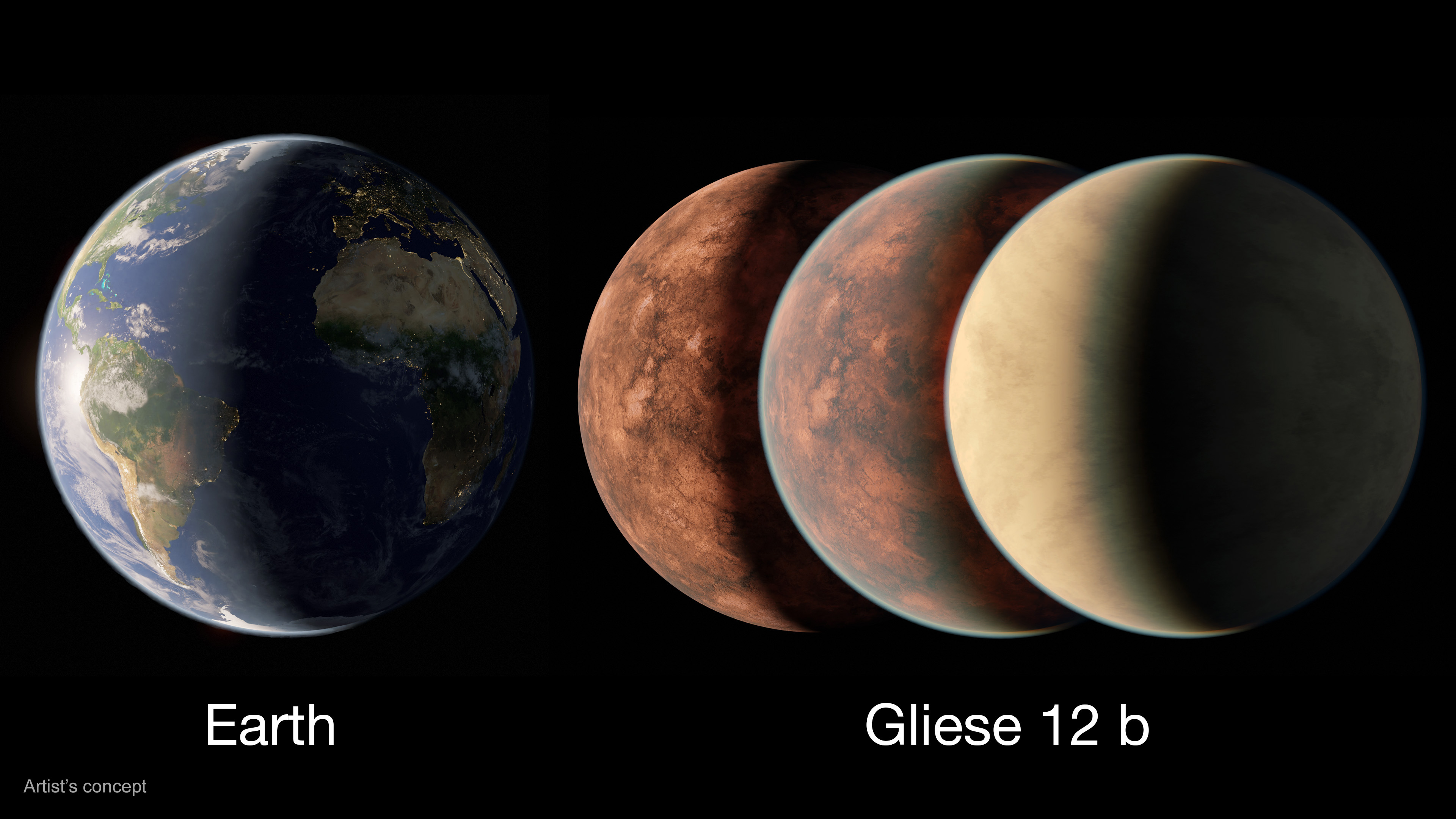
That “range of possibilities” is built into the official NASA visualization, where the same planet is shown as airless, hazy, or fully cloud covered, and NASA notes that JWST follow up can help determine how much atmosphere the planet retains (NASA Scientific Visualization Studio, 2024). This matches the scientific point: the transit method can tell you size and orbit, but atmosphere requires spectroscopy.
The discovery paper supports the uncertainty by emphasizing future prospects. It states that Gliese 12 b is one of the best targets to study whether Earth like planets orbiting cool stars can retain their atmospheres, which is the exact scientific question behind the venus 2.0 idea (Dholakia et al., 2024). The paper does not claim an atmosphere has already been detected, and neither does NASA, so this article does not claim it either.
One reason the system is exciting is the host star. The discovery paper describes Gliese 12 as having one of the lowest stellar activity levels known for M dwarfs (Dholakia et al., 2024). In plain English, lower activity often means fewer violent flares, which can reduce atmospheric erosion. NASA also notes the star does not show extreme behavior (NASA, 2024). These statements align: both sources are pointing to a calmer star, which improves the chances that any atmosphere might still exist.
Why is the James Webb Space Telescope central to proving venus 2.0?
Calling a planet venus 2.0 is only meaningful if we can test it. The test is atmospheric chemistry.
NASA describes Gliese 12 b as an unusually good target for atmospheric transmission spectroscopy with JWST (NASA, 2024). Transmission spectroscopy means you measure starlight during a transit, and look for tiny color changes caused by gases absorbing specific wavelengths [a “chemical fingerprint” in light]. That exact concept is also explained in NASA’s official visualization description, which says the starlight is partly absorbed while passing through the atmosphere, encoding the chemical fingerprints of the atmosphere’s components (NASA Scientific Visualization Studio, 2024). This is the same mechanism, described in two official NASA sources.
The peer reviewed paper reinforces this by labeling the planet as ideal for atmospheric transmission spectroscopy and by emphasizing the system’s brightness and closeness, which drive stronger measurement signals (Dholakia et al., 2024). Importantly, the paper does not promise what JWST will find. It argues the target is good enough that JWST can realistically try.
If JWST observations detect certain gases, they could quickly separate “Earth like” and “Venus like” stories. For example:
- A thick CO2 rich atmosphere with strong greenhouse behavior would push the planet toward a Venus like interpretation.
- A thin atmosphere or no atmosphere would point toward an airless rocky world.
- If clouds dominate, they could hide deeper layers, which is also a very Venus like challenge.
Because NASA’s own article frames Gliese 12 b as a case where atmosphere is the deciding factor, and because the discovery paper is built around spectroscopy potential, JWST becomes the practical tool for confirming whether “venus 2.0” is a fair label (NASA, 2024; Dholakia et al., 2024).
How does venus 2.0 connect to the mystery of Earth versus Venus?
The deeper reason scientists care about a venus 2.0 candidate is that Venus is the clearest warning that “Earth sized” does not mean “Earth like.”
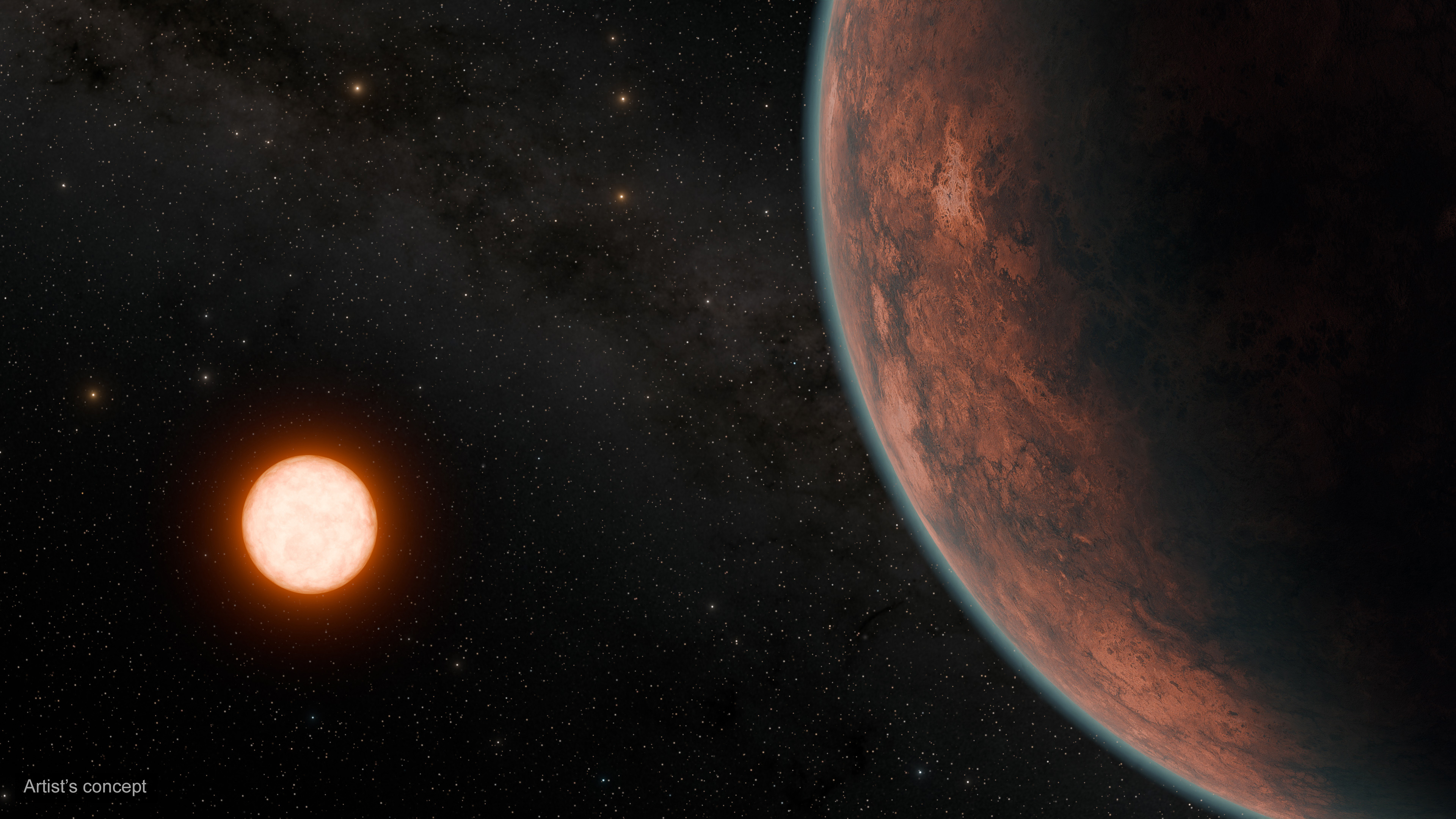
NASA’s Venus facts page emphasizes that Venus and Earth are similar in size, but Venus’s atmosphere and climate went in a drastically different direction, producing temperatures near 900°F (475°C) and crushing conditions (NASA, 2025). That is the cautionary baseline. Now place Gliese 12 b into the story: NASA reports it gets starlight closer to Venus than to Earth, and the planet is small and rocky enough that it could be on the same kind of evolutionary edge (NASA, 2024).
NASA also includes a key scientific idea: the researchers discuss the possibility that Earth and Venus might have had their first atmospheres stripped away and then rebuilt through volcanic activity, and that studying more worlds in between can help explain why the outcomes diverged (NASA, 2024). This article keeps that point tightly on topic: Gliese 12 b is valuable because it may sit in that “between” zone where Venus like outcomes become more likely.
The discovery paper frames it similarly, stating the planet can advance understanding of habitability by testing whether Earth like planets around cool stars can retain atmospheres, which is one of the central steps in any Earth versus Venus comparison (Dholakia et al., 2024). In other words, venus 2.0 is not only about “finding another Venus,” it is about building a controlled test of atmospheric survival.
Conclusion
Gliese 12 b is one of the clearest nearby candidates for what people casually call venus 2.0: a rocky planet close enough to study, heated enough to raise the Venus question, and positioned perfectly for atmospheric tests. NASA reports that it receives about 1.6 times Earth’s incoming energy and sits at about 85 percent of Venus’s energy level, making it an unusually sharp experiment in how rocky worlds change under stronger starlight (NASA, 2024). The peer reviewed discovery paper backs up the system’s strength with precise measurements like a 12.76144 day orbit, an Earth sized radius, and a temperature estimate of about 315 K, while stressing that atmosphere and mass measurements are the next critical steps (Dholakia et al., 2024).
If future observations show a thick greenhouse atmosphere, “venus 2.0” could become a real, measurable Venus like case beyond our solar system. If the planet is airless or only lightly wrapped in gas, it may instead teach a different lesson about atmosphere loss around small stars. Either way, this is exactly the kind of nearby, testable world that can turn the Earth versus Venus mystery into a set of real measurements.
So as the next generation of observations arrives, one question stands above the rest: when we finally read the atmosphere of Gliese 12 b, will it look more like a young Earth, or will it confirm the signature of venus 2.0?
Sources
Dholakia, S., Palethorpe, L., Venner, A., Mortier, A., Wilson, T. G., Huang, C. X., Rice, K., Van Eylen, V., Nabbie, E., Cloutier, R., Boschin, W., Ciardi, D., Delrez, L., Dransfield, G., Ducrot, E., Essack, Z., Everett, M. E., Gillon, M., Hooton, M. J., et al. (2024). Gliese 12 b, a temperate Earth sized planet at 12 parsecs discovered with TESS and CHEOPS. Monthly Notices of the Royal Astronomical Society, 531(1), 1276 to 1293. https://doi.org/10.1093/mnras/stae1152
NASA. (2025, April 21). Venus facts. NASA Science. https://science.nasa.gov/venus/venus-facts/
NASA Scientific Visualization Studio. (2024, May 23). Gliese 12 b: An intriguing world sized between Earth and Venus. NASA Goddard Space Flight Center. https://svs.gsfc.nasa.gov/14581
Reddy, F. (2024, May 23). NASA’s TESS finds intriguing world sized between Earth, Venus. NASA Science. https://science.nasa.gov/universe/exoplanets/nasas-tess-finds-intriguing-world-sized-between-earth-venus/