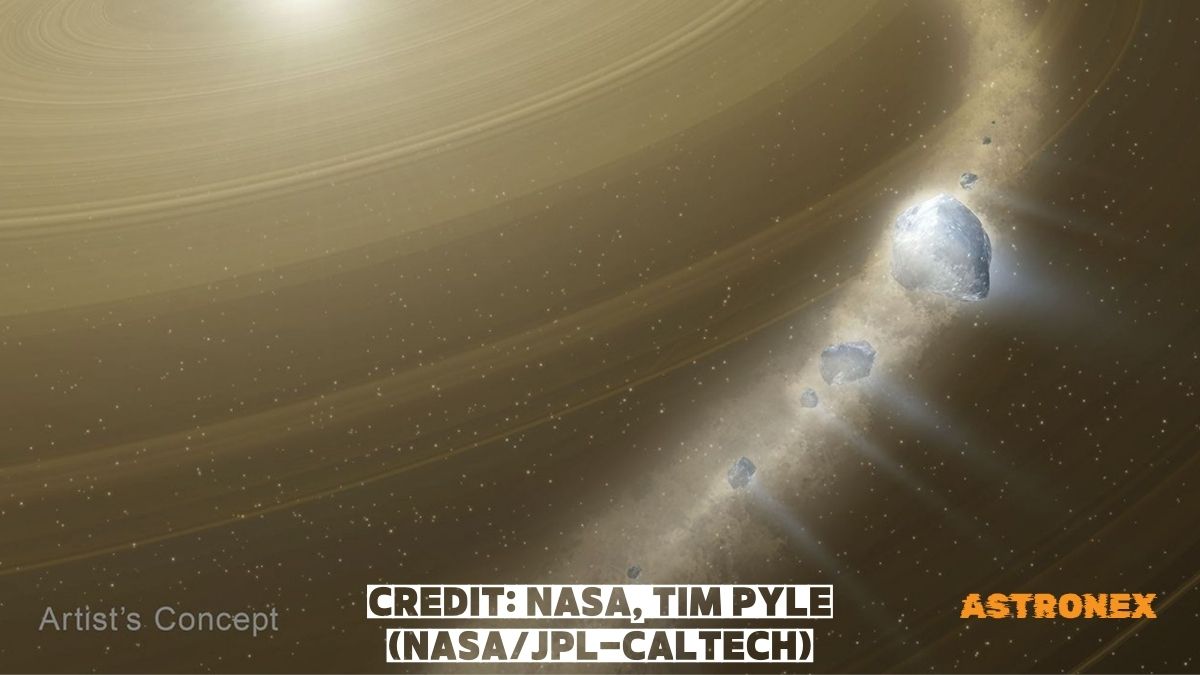
Astronomers have recently captured a stunning event in space where a compact stellar remnant known as a white dwarf is actively pulling in and breaking apart a frozen world similar to Pluto. This observation comes from data collected by a long running space telescope highlighting how these dense stars can disrupt and ingest material from their surrounding systems even long after their main life cycle ends. The white dwarf in question sits relatively close to us at just 260 light years away making it an ideal target for detailed study. By examining the light from this star scientists detected unusual chemical signals in its outer layers showing it is incorporating icy debris rich in elements that point to a distant icy origin. Such events provide a rare window into the late stages of planetary systems around other stars revealing processes that might one day affect our own solar neighborhood.
This particular white dwarf about half the mass of our Sun but squeezed down to roughly Earths size exerts tremendous gravitational pull capable of tearing apart objects that venture too near. The ingested fragment appears to come from an icy ring of debris akin to the Kuiper Belt in our solar system where Pluto resides. Observations show the star is accreting material at a rapid rate equivalent to swallowing the mass of a large animal every second. This discovery marks a first in spotting such a volatile rich meal for this type of star underscoring the diversity of planetary remnants that survive stellar evolution. It challenges previous ideas about how quickly icy bodies are ejected or destroyed during a stars transformation into a white dwarf. What secrets might this cosmic meal reveal about the building blocks of distant worlds and their ultimate fates.
What Is a White Dwarf and How Does It Form
A white dwarf represents the final stage in the life of a star like our Sun after it has exhausted its nuclear fuel and shed its outer layers. These remnants are incredibly dense with masses comparable to the Sun but volumes similar to Earth resulting in surface gravities millions of times stronger than on our planet. For instance the white dwarf observed here has a mass around 0.5 solar masses (about 166,500 times Earths mass) packed into a sphere roughly 12700 kilometers in diameter. This density means a teaspoon of white dwarf material would weigh as much as an elephant on Earth, a fun fact that illustrates their extreme compactness. The formation process begins when a medium sized star expands into a red giant then expels its envelope leaving behind a hot core that cools over billions of years.
The cooling process is gradual with the white dwarf radiating away its stored heat without generating new energy through fusion. Over time it fades from view but its gravity remains potent enough to influence nearby objects. In systems where planets or debris disks survive the stars giant phase these remnants can perturb orbits leading to close encounters. According to NASAs Hubble observation of white dwarf accretion such interactions can cause icy bodies to spiral inward where tidal forces rip them apart. This particular white dwarf WD 1647+375 shows signs of ongoing activity despite being in a stable cooling phase estimated at several hundred million years old. Comparisons to our Sun suggest that in about five billion years it too will become a white dwarf potentially disrupting the outer solar system in similar ways.
White dwarfs are supported against further collapse by electron degeneracy pressure a quantum mechanical effect where electrons are packed so tightly they resist compression (a concept from quantum physics where particles follow Pauli exclusion principle). This stability allows them to persist for trillions of years far longer than the current age of the universe. However their atmospheres usually consist of hydrogen or helium with any heavier elements sinking inward due to high gravity. When pollution occurs from accreted material it creates detectable spectral lines in the stars light. Bullet points for key formation steps include stellar core fusion depleting hydrogen then helium red giant expansion shedding outer layers and core contraction to white dwarf. Fun fact most stars in the Milky Way will end as white dwarfs making them common endpoints in stellar evolution.
How Do White Dwarfs Consume Planetary Material
White dwarfs consume planetary material through a process called accretion where gravitational forces draw in debris from disrupted planets asteroids or comets. When an object approaches too closely within the Roche limit (the distance where tidal forces overcome the bodys self gravity typically a few times the white dwarfs radius) it fragments into smaller pieces. These pieces then form a disk around the star gradually spiraling inward and vaporizing upon impact with the atmosphere. For the observed white dwarf the accretion rate is approximately 200000 kilograms per second a pace that has persisted for at least 13 years based on repeated observations. This rate suggests a substantial supply of material likely from a larger parent body broken apart over time.
The material mixes into the white dwarfs outer layers creating a polluted atmosphere that astronomers can analyze through spectroscopy. Ultraviolet light is crucial here as it reveals elements like carbon sulfur nitrogen and oxygen that are invisible in optical wavelengths. In this case the high oxygen levels indicate abundant water ice while elevated nitrogen points to surface ices similar to those on Pluto. Such consumption events are not rare about a quarter of white dwarfs show signs of metal pollution but detecting icy volatiles is uncommon due to their tendency to evaporate or be lost earlier in the systems history. Comparisons to computer models show that dynamical instabilities like planet planet scattering can fling outer bodies inward even billions of years after the stars death.
To visualize imagine a debris disk like a flattened ring of rubble where particles collide and grind down over time feeding the star steadily. Bullet points for the process steps are orbital perturbation causing inward migration crossing the Roche limit for disruption disk formation from fragments and gradual accretion onto the star. A fun fact is that the energy released during accretion can temporarily reheat the white dwarf making it appear brighter than expected for its age. According to Space Telescope Science Institutes report on Hubble white dwarf findings this event provides direct evidence of how planetary systems evolve post stellar death offering clues to the fate of exo Kuiper Belts.
What Did Astronomers Discover About This Specific White Dwarf Event
Astronomers discovered that the white dwarf WD 1647+375 is devouring a fragment of an icy world with a composition rich in volatiles marking the first clear case for a hydrogen atmosphere white dwarf. Using ultraviolet spectroscopy they identified an excess of oxygen suggesting 64 percent water ice content along with 5 percent nitrogen by mass the highest nitrogen fraction ever seen in such debris. The parent object likely originated from the systems outer regions similar to our Kuiper Belt and was at least 3 kilometers in diameter possibly up to 50 kilometers with a mass in the quintillion kilogram range (1018 kilograms). The ice to rock ratio of 2.5 exceeds typical values for known Kuiper Belt objects indicating a dwarf planet like fragment perhaps akin to Plutos mantle and crust.
The discovery surprised researchers because icy bodies are usually ejected during the stars red giant phase yet here one survived to be consumed later. Spectral analysis showed the material is not from a rocky asteroid but a water rich planetesimal providing insights into extrasolar icy worlds. The white dwarfs atmosphere acts like a forensic record preserving the chemical fingerprint of the ingested object. For non experts spectral lines are like barcodes in light where each element absorbs or emits at specific wavelengths (measured in nanometers). This event was observed over multiple epochs confirming ongoing accretion rather than a one time event.
To help visualize suggest referring to artists illustrations of debris disks around white dwarfs showing swirling fragments being pulled in. Bullet points for key discoveries include detection of high nitrogen and oxygen volatiles confirmation of icy origin first for hydrogen white dwarf and implications for planetary survival. A fun fact is that if scaled up this accretion rate equals consuming a blue whales mass every second a vivid comparison to the stars voracious appetite. According to the peer reviewed study on icy extrasolar planetesimal discovery this finding expands our understanding of how volatiles persist in evolved systems.
What Makes This Pluto Like Object Unique in White Dwarf Studies
This Pluto like object stands out due to its high volatile content particularly nitrogen which mirrors Plutos surface ices but in an extrasolar context. Unlike typical accreted material which is rocky and metal rich this fragment shows 64 percent water ice with carbon sulfur and oxygen abundances indicating it formed in cold distant orbits where ices condense easily. The nitrogen level at 5 percent by mass suggests a differentiated body with layers similar to dwarf planets where volatiles accumulate on the surface (differentiation is when denser materials sink forming core mantle crust). Its size estimate from 3 to 50 kilometers places it between comets and small moons making it a rare intermediate object for study.
Comparisons to solar system bodies like comet Halley or the nitrogen rich comet C2016 R2 highlight similarities but the higher ice ratio suggests unique formation conditions perhaps in a nitrogen abundant nebula. This uniqueness challenges models of planetary system evolution showing that icy reservoirs can endure longer than thought. For clarity volatile elements have low boiling points (below 100 Kelvin for nitrogen) meaning they remain solid only in frigid environments. The objects disruption releases these into the white dwarfs atmosphere where they are detectable for a limited time before sinking.
Suggest viewing diagrams of Pluto like structures with icy mantles over rocky cores to grasp the composition. Bullet points for unique traits are extreme nitrogen abundance high water content survival post red giant phase and implications for life ingredients delivery. A fun fact is that such objects could carry prebiotic molecules hinting at how water and organics spread across galaxies though this event is destructive rather than constructive.
What Are the Implications for Our Solar Systems Future
This observation implies that in billions of years when our Sun becomes a white dwarf similar events could occur in the outer solar system. The Kuiper Belt home to Pluto and countless icy bodies might be destabilized by gravitational tugs from surviving planets like Jupiter or Neptune flinging objects inward. Models predict that during the Suns red giant phase many inner planets will be engulfed but outer ones could migrate or be ejected. However some icy remnants might linger close enough for the white dwarf to consume them creating a polluted atmosphere observable from afar. This white dwarf system acts as a preview with its exo Kuiper Belt analog being tapped for material.
For Earth the implication is terminal as it will likely be vaporized during the red giant expansion but for distant worlds like Pluto analogs survival is possible until later consumption. Uncertainties exist in exact timings with estimates ranging from 5 to 8 billion years for the Suns transformation due to modeling variations in mass loss rates (about 50 percent of mass ejected). This discovery encourages refining simulations to include volatile preservation. Bullet points for implications include potential Kuiper Belt disruption white dwarf pollution as a common fate and insights into volatile delivery to other systems. A fun fact is that alien astronomers might one day spot our Suns white dwarf eating Pluto like scraps deducing our systems history.
The event also broadens searches for life ingredients as icy bodies often carry water and organics essential for habitability. While this consumption destroys the object it shows such materials are widespread in the galaxy.
Conclusion
In summary this Hubble detected event of a white dwarf consuming a Pluto like icy fragment reveals the dynamic nature of planetary systems long after their stars have died. With detailed chemical analysis showing high water and nitrogen content it highlights the survival and eventual fate of outer icy worlds providing a mirror to our solar systems potential future. Such discoveries underscore the importance of ultraviolet observations in uncovering hidden aspects of cosmic evolution. As technology advances more such meals will likely be spotted enriching our knowledge of white dwarf planet consumption. What other frozen worlds might be lurking in the outskirts waiting to meet a similar end.
Sources
NASA. (2025, September 18). NASA’s Hubble Sees White Dwarf Eating Piece of Pluto-Like Object. NASA Science. https://science.nasa.gov/missions/hubble/nasas-hubble-sees-white-dwarf-eating-piece-of-pluto-like-object/
Sahu, S., Gänsicke, B. T., & et al. (2025, September 18). Discovery of an icy and nitrogen-rich extra-solar planetesimal. Monthly Notices of the Royal Astronomical Society. https://doi.org/10.1093/mnras/staf1424
Space Telescope Science Institute (STScI). (2025, September 18). NASA’s Hubble Sees White Dwarf Eating Piece of Pluto-Like Object. STScI. https://www.stsci.edu/contents/news-releases/2025/news-2025-024