The Sun, at the heart of our solar system, powers everything from plant growth to weather patterns through its steady release of energy. This star, classified as a G2V type (a yellow dwarf on the main sequence), formed about 4.6 billion years ago from a collapsing cloud of gas and dust known as a solar nebula. Today, it fuses hydrogen into helium in its core, a process that has kept it stable for billions of years. Recent observations from space missions confirm that the Sun is roughly halfway through its total lifespan of about 10 billion years. Data from the European Space Agency’s Gaia mission, which maps billions of stars, shows that stars like our Sun follow a predictable path of evolution, gradually changing in size, temperature, and brightness.
As the Sun ages, its internal processes will shift dramatically. In approximately 5 billion years, the hydrogen fuel in its core will deplete, leading to expansion and increased luminosity (brightness). This transformation will reshape the entire solar system, affecting planets, asteroids, and comets. According to NASA’s detailed Sun facts overview, the Sun will swell into a red giant, becoming so large that its outer layers could extend beyond Earth’s orbit. Such changes are based on models of stellar evolution, refined by data from telescopes like Hubble. These events highlight the dynamic nature of stars, reminding us that even the most reliable cosmic objects have finite lives.
But what exactly triggers these changes, and how will they unfold over time? This leads to a key question: what will the solar system look like billions of years from now when the Sun reaches its final stages?
How Long Until the Sun Dies?
The Sun’s remaining lifetime is estimated at about 5 billion years before it begins its death throes. Current models, supported by observations of similar stars, indicate that the Sun is currently 4.6 billion years old and in the stable main-sequence phase. During this period, it converts about 600 million tons of hydrogen into helium every second through nuclear fusion (a process where atomic nuclei combine, releasing energy). As per ESA’s Gaia mission findings on solar analogs, the Sun will reach its hottest point at around 8 billion years of age, with a surface temperature peaking slightly above its current 5,500 degrees Celsius (9,932 degrees Fahrenheit). After that, the core will run low on hydrogen, causing the star to destabilize.
This timeline comes from comparing the Sun to thousands of other stars with similar mass—about 1 solar mass (1.989 × 10^30 kilograms)—and composition, mostly hydrogen (74%) and helium (24%). For example, stars like Alpha Centauri A, which is slightly more massive, provide clues about faster evolution paths. The Sun’s death won’t be sudden; it will take another 1 to 2 billion years after the main-sequence ends for full transformation. Fun fact: if the Sun were a car, it has used half its fuel tank, but the engine will start sputtering in about 5 billion years. Bullet points on key milestones:
- Age 4.6 billion years: Current stable phase.
- Age 8 billion years: Peak temperature.
- Age 10-11 billion years: Expansion begins.
- Beyond 11 billion years: Core collapse and outer layer ejection.
Uncertainties exist due to slight variations in mass loss rates, but models agree on a 5-billion-year window. To visualize, consider a diagram of the Hertzsprung-Russell diagram, where stars plot their life paths based on luminosity and temperature.
What Happens When the Sun Runs Out of Fuel?
When the Sun exhausts its core hydrogen, fusion will halt there, but continue in a shell around the core. This causes the core to contract under gravity, heating up to ignite helium fusion into carbon and oxygen. The outer layers will expand due to increased internal pressure, turning the Sun into a red giant with a radius up to 256 times its current size (about 1.6 astronomical units, or AU, where 1 AU is 149.6 million kilometers). Data from NASA’s exoplanet studies confirm this for Sun-like stars, where the luminosity increases by factors of thousands.
The process releases immense energy, but the surface cools to around 3,000 degrees Celsius (5,432 degrees Fahrenheit), giving it a reddish hue—hence “red giant.” Comparisons help: today, the Sun’s diameter is 1.39 million kilometers, but as a red giant, it could span from here to beyond Venus’s orbit (0.72 AU). A fun fact is that this expansion happens in pulses, with the star shedding mass in bursts, losing up to 50% of its total mass (equivalent to ejecting material at speeds of 10-30 kilometers per second).
In our solar system, this means drastic changes. The increased heat will boil away oceans on any remaining worlds, and radiation levels will spike. According to NASA’s analysis of stellar aging, the Sun’s gravitational pull weakens as mass is lost, altering planetary orbits. For instance, outer planets might migrate outward by a factor of two. To illustrate complex mass loss, refer to simulations showing episodic ejections, like wind from a giant balloon deflating unevenly.
Will the Sun Engulf the Inner Planets?
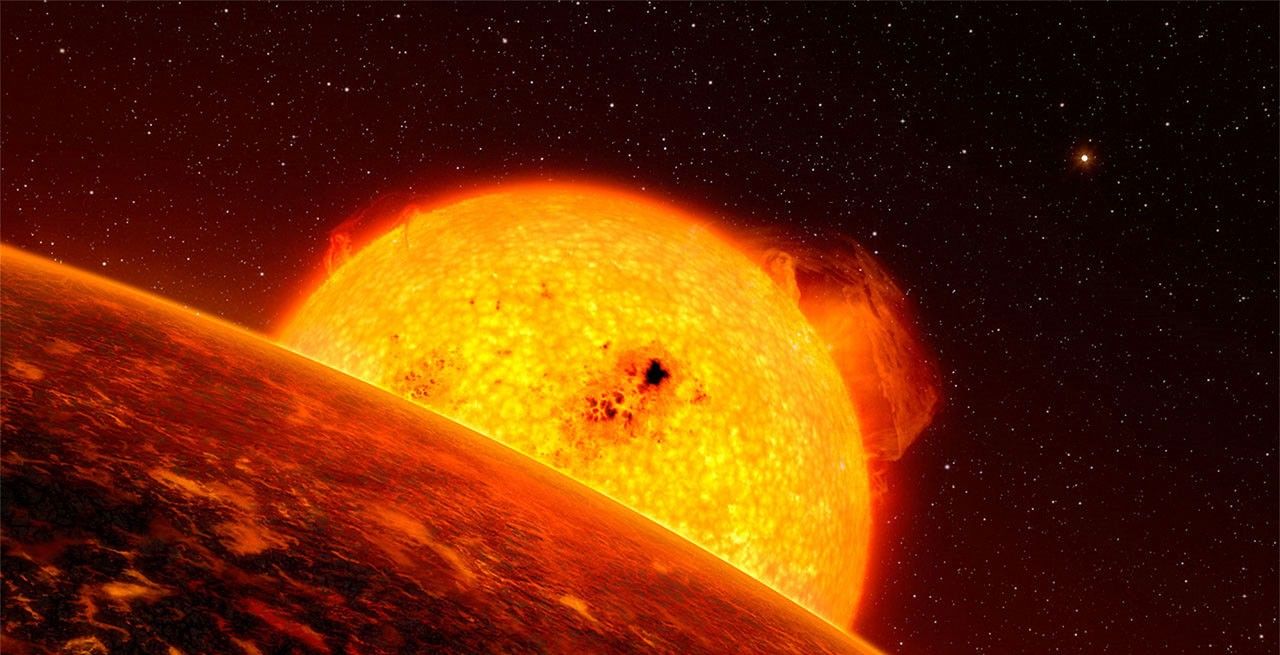
Yes, during its red giant phase, the Sun is expected to engulf Mercury and Venus entirely. Mercury, at 0.39 AU (58 million kilometers), and Venus at 0.72 AU (108 million kilometers), will be swallowed as the Sun’s radius grows to about 1 AU or more. Earth’s fate at 1 AU is less certain, with models suggesting it might be engulfed or left as a scorched remnant. Recent computer simulations of gravitational dynamics indicate Earth could spiral inward due to tidal forces (gravitational pulls causing orbital decay), leading to vaporization of its surface rocks, leaving only an iron core.
This matches observations of other systems where planets have been consumed by expanding stars. For example, the Sun’s increased luminosity will heat Earth to over 1,000 degrees Celsius (1,832 degrees Fahrenheit) long before engulfment, making it uninhabitable. Mars, at 1.52 AU (228 million kilometers), is likely to survive without being swallowed, but its thin atmosphere (mostly carbon dioxide at 0.006 atm pressure) will be stripped away by intense solar winds. Bullet points on inner planet fates:
- Mercury: Completely engulfed and disintegrated.
- Venus: Swallowed, its thick atmosphere (96% CO2) adding to the Sun’s outer layers.
- Earth: Probably engulfed, with uncertainty of ±0.1 AU in models.
- Mars: Survives but becomes a barren, hot rock.
If values differ slightly across sources, it’s due to model assumptions on mass loss, ranging from 40-60%. A figure of orbital distances versus Sun radius would help visualize this.
How Will the Outer Planets Fare During the Sun’s Death?
The outer gas giants—Jupiter, Saturn, Uranus, and Neptune—will likely survive the red giant phase but face severe alterations. As the Sun loses mass, their orbits will expand outward to about twice their current distances: Jupiter from 5.2 AU (778 million kilometers) to around 10 AU, Saturn from 9.5 AU to 19 AU, and so on. This is because gravitational binding weakens proportionally to mass reduction. However, the intense radiation will strip away their gaseous envelopes, potentially leaving rocky cores exposed.
Saturn’s iconic rings, composed of water ice particles (sizes from micrometers to meters), will vaporize due to temperatures rising above 100 degrees Celsius (212 degrees Fahrenheit). Icy moons like Europa (with its subsurface ocean) and Enceladus will lose their ice shells, possibly exposing liquid water temporarily before it evaporates. Neptune, at 30 AU (4.5 billion kilometers), might be ejected if mass loss exceeds 50%, becoming a rogue planet wandering interstellar space. Comparisons: think of the outer planets like balloons in a hot room—they inflate and pop. Fun fact: some distant Kuiper Belt objects could thaw, creating temporary habitable zones far out.
Uncertainties include exact mass loss rates, but observations of white dwarf systems show surviving planets often have disrupted orbits. Suggest a chart comparing current and future orbital radii.
What Is the Final Stage After the Red Giant Phase?
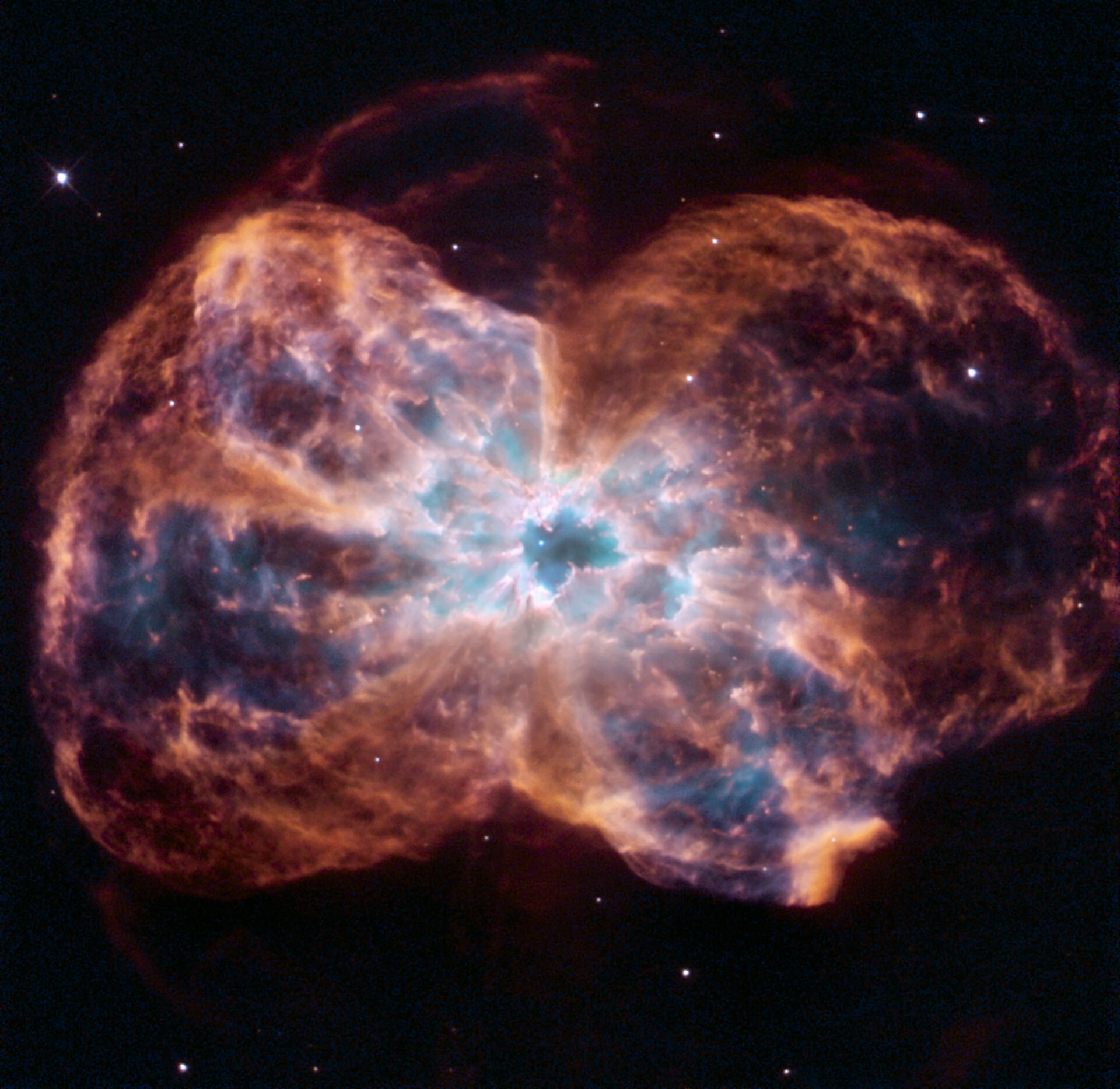
After the red giant phase, the Sun will eject its outer layers in a planetary nebula—a glowing shell of gas expanding at 20-30 kilometers per second. This leaves behind a hot core that collapses into a white dwarf, about the size of Earth (diameter 12,742 kilometers) but with half the Sun’s original mass (9.945 × 10^29 kilograms). The white dwarf will cool slowly over trillions of years, eventually becoming a black dwarf, but that’s far beyond our timeline.
The planetary nebula forms from ionized gases (plasma where electrons are stripped from atoms), creating colorful displays visible in telescopes. For our Sun, this shell could extend several light-years (1 light-year is 9.46 trillion kilometers). The solar system remnants will orbit this dim white dwarf, with surviving planets frozen in darkness. According to ESA’s data on white dwarfs from Sun-like stars, they start at temperatures of 100,000 degrees Celsius (180,032 degrees Fahrenheit) but fade. No explosion like a supernova occurs, as the Sun lacks sufficient mass (needs 8 solar masses for that).
Could Any Part of the Solar System Remain Habitable?
In the distant future, as the Sun expands, the habitable zone (region where liquid water can exist) will shift outward. Currently at 0.95-1.37 AU, it could move to the outer solar system, potentially thawing icy bodies in the Kuiper Belt (30-50 AU). Objects like Pluto (diameter 2,377 kilometers) might develop atmospheres and oceans temporarily, offering niches for microbial life if seeded earlier. However, this window is brief—millions of years—before the Sun’s instability ends it.
Post-white dwarf, the system will be cold and dark, with no energy for life. Surviving moons of gas giants might retain internal heat from tidal forces (gravitational flexing causing friction), but without sunlight, photosynthesis-based life ends. Comparisons: like moving a fridge farther from a dying fire—it gets cold fast. Uncertainties in habitability arise from variable expansion rates, but models suggest fleeting opportunities far out.
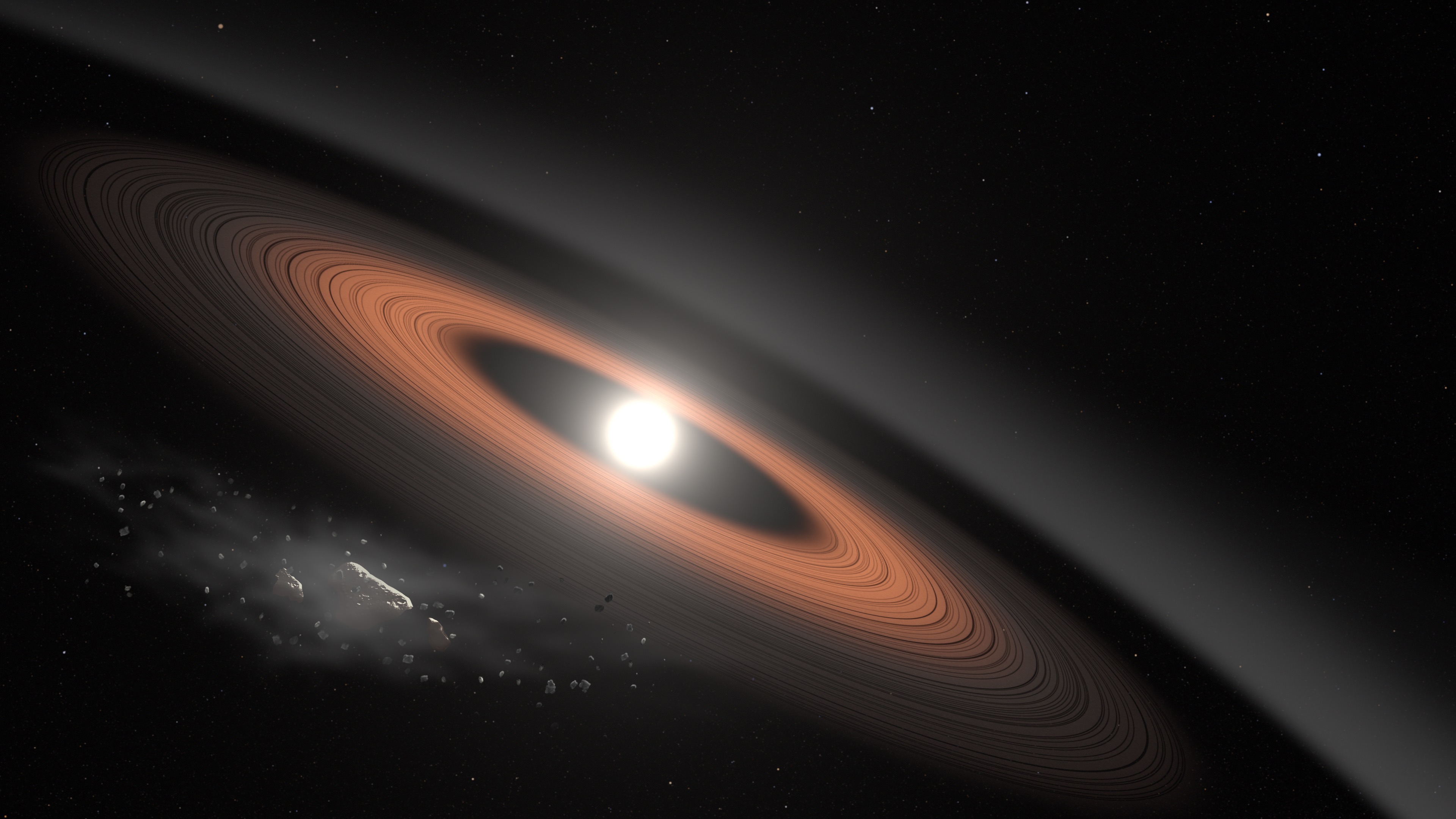
The Sun’s death marks the end of our solar system as we know it, with inner worlds destroyed and outer ones transformed into frozen relics orbiting a faint white dwarf. This process, driven by nuclear exhaustion and gravitational shifts, underscores the impermanence of cosmic structures. Yet, it also highlights the vast timescales involved, giving humanity billions of years to explore alternatives. What new discoveries might we make about stellar endings before then?
📌 Frequently Asked Questions
What will happen when our Sun dies?
The Sun will expand into a red giant, engulfing inner planets, then shed its layers to become a white dwarf. This leaves the solar system cold and dark.
When will the Sun die?
The Sun has about 5 billion years left before it starts dying, with the red giant phase beginning around 10-11 billion years from its birth.
Will Earth survive the Sun’s death?
Earth will likely be engulfed or vaporized during the red giant phase, becoming uninhabitable much earlier due to extreme heat.
What happens to the planets when the Sun becomes a red giant?
Inner planets like Mercury and Venus will be swallowed, while outer ones may survive but lose atmospheres and ices from intense radiation.
Can life survive the Sun’s death?
Life on Earth won’t, but distant icy worlds might temporarily become habitable as the heat zone shifts outward, though only briefly.
Will the Sun explode when it dies?
No, the Sun lacks the mass for a supernova; it will gently eject layers in a planetary nebula and collapse into a white dwarf.
What is a white dwarf and will the Sun become one?
A white dwarf is a dense, Earth-sized remnant of a star’s core; yes, the Sun will end as one after losing its outer layers.
How will the outer planets change after the Sun’s death?
Their orbits will expand, atmospheres may be stripped, and icy features like rings and moons will melt or evaporate.
What causes the Sun to die?
Exhaustion of hydrogen fuel in its core leads to instability, expansion, and eventual collapse into a white dwarf.
Will the solar system be destroyed completely when the Sun dies?
Not entirely; some outer planets and distant objects may remain, orbiting the white dwarf in a frozen state.
Sources
European Space Agency. (2022, August 11). Gaia reveals the past and future of the Sun. European Space Agency. https://www.esa.int/Science_Exploration/Space_Science/Gaia/Gaia_reveals_the_past_and_future_of_the_Sun
NASA. (2024, October 29). Chapter 6: Aging Into Gianthood. NASA Science. https://science.nasa.gov/exoplanets/resources/life-and-death/chapter-6/
NASA. (2020, December 2). Sun: Facts. NASA Science. https://science.nasa.gov/sun/facts/