
The solar system we know today features four inner rocky planets: Mercury, Venus, Earth, and Mars. Yet, scientific models based on computer simulations suggest that billions of years ago, a fifth terrestrial planet may have orbited between Mars and the asteroid belt. This idea, known as the Planet V hypothesis, proposes that the early solar system was more crowded, with this additional world influencing the formation and stability of neighboring bodies. Drawing from dynamical studies, researchers have explored how such a planet could explain puzzling features like the intense cratering seen on the Moon and inner planets around 3.8 billion years ago.
This theory emerges from efforts to understand the chaotic period following the solar system’s birth about 4.6 billion years ago, when leftover debris bombarded the young planets. According to detailed numerical integrations, Planet V could have remained stable for hundreds of millions of years before gravitational interactions disrupted it. Such scenarios help clarify why the asteroid belt appears depleted and why large impact basins formed relatively late in the system’s history. What could have caused this fifth planet to disappear, and how did its fate reshape the worlds we see today?
What evidence points to the existence of this lost terrestrial planet?
What Is the Planet V Hypothesis?
The Planet V hypothesis describes a scenario where the solar system originally had five rocky planets instead of four. Proposed to account for the timing and intensity of ancient impacts, it suggests that this extra body, roughly the size of Mars or smaller, existed in a stable orbit for a long time before becoming destabilized. Simulations show that gravitational pulls from other planets, especially Mars and Jupiter, could have gradually increased its orbital eccentricity (a measure of how elongated the path is), leading to crossings into unstable regions.
In these models, Planet V’s presence helps explain the distribution of material in the inner solar system. For instance, its eventual instability might have scattered asteroids, contributing to a spike in collisions known as the Late Heavy Bombardment. According to research on planetary stability in Icarus, such a planet could survive up to 1 billion years before removal, leaving the system with its current configuration. This matches observations of lunar rocks dated to around 3.9 to 3.8 billion years ago, which indicate a period of heightened meteorite activity.
To visualize this, consider how adding an extra player in a cosmic game of billiards changes the outcomes. Planet V would have interacted with Mars frequently, causing small perturbations that built up over time. Fun fact: If Planet V had survived, the asteroid belt might look very different, possibly denser or even hosting another world. Bullet points on key aspects:
- It was a terrestrial (rocky) planet, not a gas giant.
- Positioned between 1.7 and 2.0 astronomical units (AU, where 1 AU is Earth’s distance from the Sun) from the Sun.
- Likely formed from the same protoplanetary disk as the other inner planets.
How Did Planet V Form in the Early Solar System?
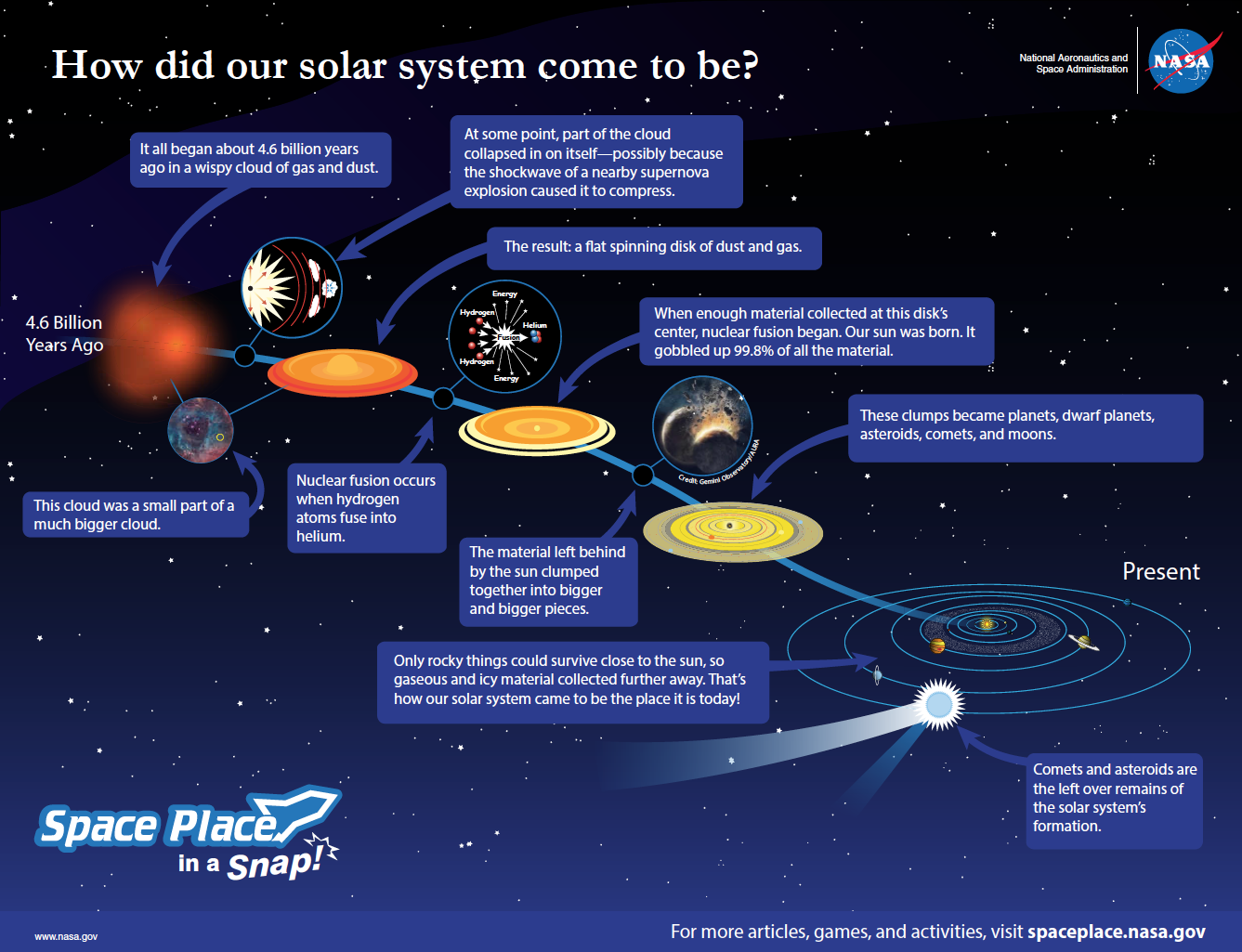
During the solar system’s formation, a spinning disk of gas and dust surrounded the young Sun, where particles clumped together through accretion (the process of gradual buildup). Planet V likely emerged in this disk between Mars and the region now occupied by the asteroid belt, where conditions allowed rocky bodies to coalesce. Models indicate that the inner disk had enough material for five terrestrial planets, with Planet V assembling from planetesimals (small building blocks) similar to those forming Mars.
Gravitational influences from Jupiter, the largest planet, prevented full planet growth in that zone, leaving remnants as asteroids. However, simulations suggest Planet V could have reached a sub-Martian mass before stabilization. As per studies in Astronomy & Astrophysics on the Late Heavy Bombardment mechanism, this fifth planet fit into a configuration that remained dynamically quiet for hundreds of millions of years. Comparisons to exoplanet systems observed by telescopes show that multi-planet setups often include bodies in similar intermediate orbits.
Think of it like baking cookies too close together; some merge, others stay small. Planet V might have been one that grew just enough to persist initially. Fun fact: The total mass of the asteroid belt today is only about 4% of the Moon’s mass, hinting at significant depletion possibly linked to Planet V. Bullet points on formation steps:
- Started in a protoplanetary disk 4.6 billion years ago.
- Accreted rocky material at 1.7-1.95 AU.
- Influenced by Jupiter’s resonance (periodic gravitational tugs), limiting its growth.
What Was the Orbit and Mass of Planet V?
Planet V’s proposed orbit had a semi-major axis (average distance from the Sun) between 1.7 and 1.95 AU, with low initial eccentricity around 0 to 0.05 and inclination up to 5 degrees. This placed it beyond Mars (at 1.52 AU) but inward of the asteroid belt’s main part starting at 2.1 AU. Simulations tested various starting points, showing that closer separations to Mars led to faster instability.
Its mass was estimated at 0.1 to 0.5 times that of Mars, or about 1 to 5 lunar masses (where the Moon’s mass is 7.34 x 10^22 kg). Heavier versions caused too much disruption to surviving planets, while lighter ones favored solar collisions. According to NASA’s explanation of the Late Heavy Bombardment, such parameters align with impact evidence, though the agency favors giant planet migration models. For non-experts, eccentricity means the orbit’s oval shape, where 0 is circular.
Like a skater spinning with arms extended, Planet V’s orbit could stretch due to perturbations. Fun fact: At 1.8 AU, it would receive about half Earth’s sunlight, making it colder than Mars. Bullet points on specifics:
- Semi-major axis: 1.7-1.95 AU.
- Mass range: 2.5-5 lunar masses for optimal simulations.
- Initial pericenter (closest approach to Sun): Around 1.65 AU in some cases.
How Did Planet V Become Unstable?
Over time, repeated close encounters with Mars caused Planet V’s orbit to evolve, increasing its eccentricity until it crossed into the asteroid belt or inner planet zones. This instability unfolded on timescales of 100 to 700 million years, driven by secular perturbations (long-term gravitational effects). In about 75% of simulations, it survived initial phases but eventually faced removal.
The process involved stochastic (random) jumps in orbital elements from Mars interactions, leading to Earth-crossing in 80% of cases. Research confirms that reducing Mars’s aphelion (farthest point) extended stability periods. Comparisons to the Nice model, where giant planets shift, show Planet V as a terrestrial-focused alternative. Fun fact: The total time with aphelion in the belt was typically under 200 million years.
Bullet points on instability factors:
- Mars encounters: Primary driver, occurring every few million years.
- Jupiter’s influence: Indirect, via resonance locking.
- Outcome variability: Dependent on initial angular separation.
What Role Did Planet V Play in the Late Heavy Bombardment?
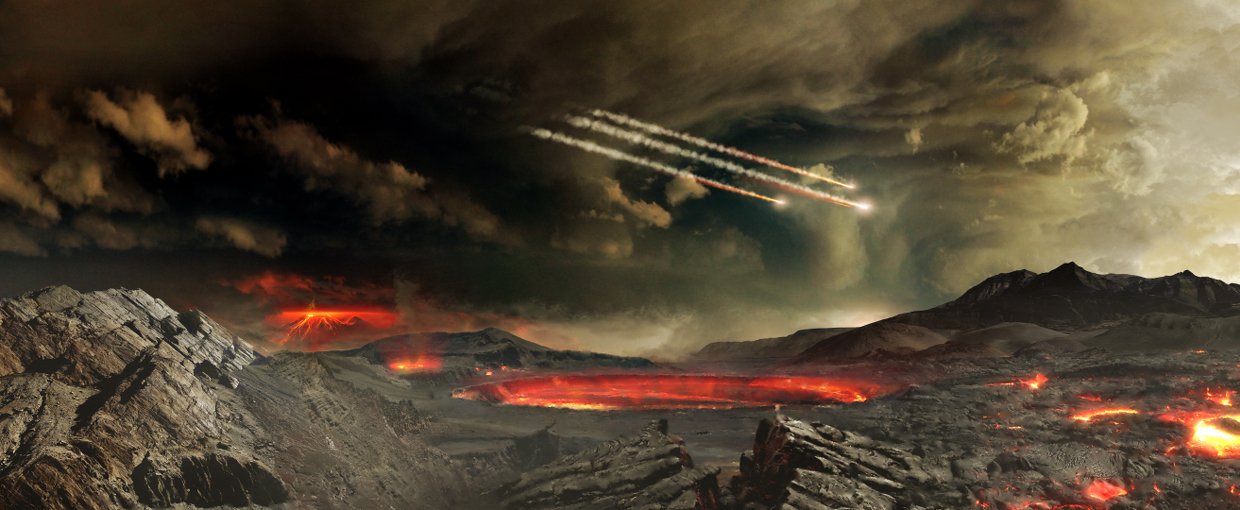
As Planet V’s eccentricity grew, its path intersected the asteroid belt, dislodging bodies and sending them toward the inner planets. This could have caused the Late Heavy Bombardment, a surge in impacts around 3.8 billion years ago, forming lunar basins like Imbrium (diameter 1,160 km). Simulations indicate a 5 lunar mass Planet V depleting 95% of the main belt in 300 million years, matching estimated bombard mass of 10^23 kg.
For the inner belt, depletion exceeded 98%, sufficient if it was initially denser. Collision probabilities with the Moon averaged 0.6%, with velocities around 11.8 km/s (kilometers per second, a measure of speed). This aligns with about 10 major basins from 2,000 large projectiles. Fun fact: Without Planet V, the LHB might require other explanations, like comet influxes. Suggest referring to gravity maps of lunar craters for visualization.
Bullet points on contributions:
- Asteroid scattering: To Earth-Moon system.
- Duration: 100-300 million years of crossing.
- Impact velocity: 10-12 km/s, creating large craters.
Is There Evidence for Planet V in the Asteroid Belt?
The asteroid belt’s low mass (3.6 x 10^21 kg) and structure suggest past depletion events consistent with Planet V’s crossings. Simulations show that a rogue planet could remove material from the inner belt (2.1-2.5 AU) more efficiently than the outer, explaining compositional gradients observed today. V-type asteroids, linked to Vesta (diameter 525 km), might trace back to such disruptions.
Orbital resonances with Jupiter, like the 3:1 at 2.5 AU, would have been excited by Planet V, leading to eccentricities over 0.3. This matches asteroid family distributions from collisional breakups. Fun fact: The belt contains over 1 million objects larger than 1 km, remnants of a once denser zone. If data varies, sources report mass ranges from 3 to 4 x 10^21 kg due to measurement uncertainties.
Bullet points on evidence:
- Depletion levels: 90-99% in models.
- Compositional mix: S-types dominant inner, C-types outer.
- Crater records: Lunar and Martian impacts dated to LHB era.
What Happened to Planet V in the End?
In most scenarios, Planet V was removed through collision with the Sun (likely for lighter masses) or ejection to hyperbolic orbit by Jupiter. About 25% of simulations saw it collide with another planet, but 24% allowed clean removal without disturbing Venus, Earth, or Mars. Lifetimes post-instability averaged 20 million years as an Earth-crosser.
Heavier versions led to terrestrial collisions, inconsistent with current orbits. The final angular momentum deficit (a stability measure) stayed low, below twice today’s value in viable cases. Fun fact: Ejection would send it wandering as a rogue planet, potentially detectable in interstellar space today.
Bullet points on fates:
- Sun collision: 40-50% of unstable cases.
- Planetary hit: 25-30%, often Earth or Venus.
- Ejection: Rare, via Jupiter slingshot.
How Does This Theory Compare to Other Explanations for the LHB?
The Planet V idea offers a terrestrial-based trigger for the LHB, differing from the Nice model where giant planet migrations scatter Kuiper belt objects. While Nice explains comet influxes, Planet V focuses on asteroids, potentially complementing it. Recent evaluations question a sharp LHB spike, suggesting gradual decline, but Planet V allows for a delayed event 600 million years after formation.
Uncertainties include primordial belt structure; if the inner was 4-13 times denser, Planet V works better. Comparisons to exosystems with disrupted belts support dynamical instability theories. Fun fact: Both models predict impact velocities around 10-15 km/s, matching crater morphologies.
Bullet points on comparisons:
- Nice model: Giant planets, comets dominant.
- Planet V: Terrestrial focus, asteroid sourced.
- Hybrid possibilities: Combined for full LHB.
Conclusion
The Planet V hypothesis provides a compelling explanation for the solar system’s early dynamics, suggesting a fifth terrestrial planet that vanished after destabilizing the asteroid belt and contributing to the Late Heavy Bombardment. Through simulations, it reconciles the timing of ancient impacts with the stable configuration we observe today, highlighting the role of gravitational interactions in shaping planetary systems. While alternative models exist, this theory underscores the chaotic nature of cosmic evolution.
Could similar lost planets lurk in the histories of distant star systems, waiting to be discovered?
📌 Frequently Asked Questions
What is the Planet V hypothesis in solar system formation?
The Planet V hypothesis proposes that a fifth rocky planet once existed between Mars and the asteroid belt, remaining stable for hundreds of millions of years before instability led to its removal. This could explain ancient impact events by scattering asteroids inward.
Did a fifth terrestrial planet exist between Mars and Jupiter?
Computer models indicate a possible fifth planet with sub-Martian mass in that region, which might have been ejected or collided with the Sun. Evidence comes from asteroid belt depletion and lunar crater ages around 3.8 billion years old.
What caused the Late Heavy Bombardment in the solar system?
It was likely a surge in asteroid and comet impacts due to orbital instabilities, possibly triggered by a rogue planet like Planet V perturbing the belt. This event reshaped surfaces of inner worlds over 100-200 million years.
How does the Planet V theory explain the asteroid belt?
The theory suggests Planet V’s eccentric orbit crossed the belt, dislodging most material and leaving the sparse remnants we see. Depletion rates in simulations match the belt’s current low mass.
What was the mass of the hypothetical Planet V?
Estimates range from 1 to 5 lunar masses, or 0.1 to 0.5 times Mars’s mass, allowing stability without overly disrupting other planets. Heavier masses led to excessive collisions in models.
How long could Planet V have survived in the solar system?
Simulations show it could last up to 1 billion years, with instability building over 100-700 million years due to Mars interactions. In 25% of cases, it endured the full simulation period.
What happened to Planet V according to the hypothesis?
It likely collided with the Sun or was ejected by Jupiter’s gravity after becoming an Earth-crosser. Clean removal without inner planet collisions occurred in about 25% of scenarios.
Is the Planet V theory supported by NASA research?
While NASA explores LHB causes through missions like GRAIL, the hypothesis stems from peer-reviewed simulations rather than direct observation. It remains one of several dynamical explanations.
How does Planet V differ from the fifth giant planet theory?
Planet V is a terrestrial rocky world, unlike the ejected ice giant in some models that explains outer system dynamics. Both address instabilities but focus on different regions.
What evidence from the Moon supports the Planet V idea?
Lunar basins formed 3.8-3.9 billion years ago suggest a delayed bombardment, consistent with Planet V’s late instability scattering asteroids. Impact velocities match model predictions.
Sources
Brasser, R., & Morbidelli, A. (2011, November). The terrestrial Planet V hypothesis as the mechanism for the origin of the late heavy bombardment. Astronomy & Astrophysics. https://www.aanda.org/articles/aa/full_html/2011/11/aa17336-11/aa17336-11.html
Chambers, J. E. (2007, August). On the stability of a planet between Mars and the asteroid belt: Implications for the Planet V hypothesis. Icarus. https://www.sciencedirect.com/science/article/abs/pii/S0019103507000644
NASA. (2024, October 1). What is the Late Heavy Bombardment? NASA Science. https://science.nasa.gov/moon/lunar-craters/what-is-the-late-heavy-bombardment/